# AIX, IBM's Unix: History, Versions and Curiosities
- **Published on:** 2026-03-30
- **Category:** News
- **Original page:** https://linuxgratis.com/en/articles/aix-ibm
The story of AIX, IBM's Unix born in 1986 for POWER systems. Key versions, the SMIT tool and trivia about one of the longest-lived commercial Unix operating systems.
---
When people talk about Unix, they usually think of free systems like [FreeBSD](/en/freebsd) or the ubiquitous [Linux kernel](/en/linux-kernel). Yet much of the enterprise world still runs on proprietary Unix variants born decades ago. **AIX**, IBM's Unix, is one of the most remarkable survivors: it has been around since 1986 and still powers banks, insurers and large data centres today.
## What AIX Is and Where It Came From
AIX stands for *Advanced Interactive eXecutive*. It is a family of proprietary Unix operating systems developed and sold by IBM since **1986**. Its technical foundation blends **UNIX System V** with **4.3BSD-compatible** extensions, a common recipe for the commercial Unix systems of that era.
The first release, **AIX Version 1**, arrived in 1986 for the **IBM 6150 RT** workstation (the RT PC), a pioneering machine because it used the **ROMP** microprocessor, one of the first commercial RISC chips in the world. According to its developers, the original AIX source ran to about a million lines of code, incorporating System V Releases 1 and 2 alongside contributions from 4.2 and 4.3 BSD.
## From the RT PC to the POWER Platform
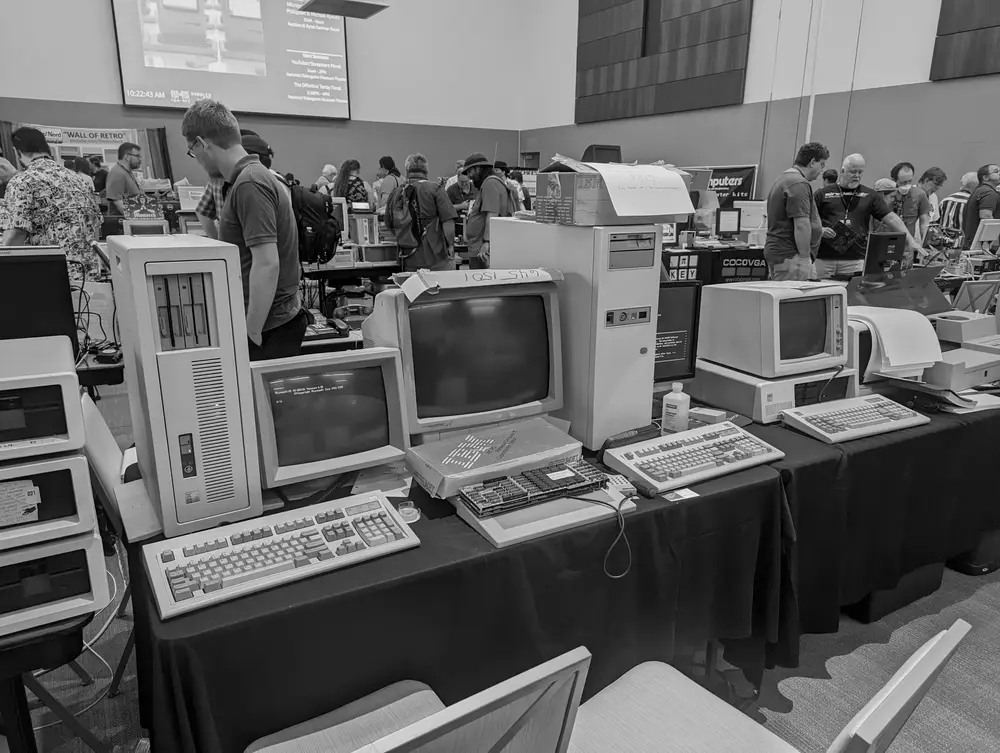
The IBM RT PC (model 6150), the first machine to run AIX Version 1 in 1986 with its RISC ROMP microprocessor. · Imagen: Patrick Finnegan / CC BY 2.0 · Wikimedia Commons
The decisive leap came in **1990** with **AIX Version 3**, designed for the new **RS/6000** platform built around **POWER** processors. This release is historically important: it was one of the first operating systems to introduce a **journaling file system (JFS)**, a technology we now take for granted that protects data integrity after a power loss. It also popularised **shared libraries**, shrinking binary sizes and reducing memory and disk usage.
In **1994** came **AIX Version 4**, which added **symmetric multiprocessing (SMP)** and matured throughout the 1990s, culminating in **AIX 4.3.3** in 1999. From then on, AIX cemented its position as the reference Unix for high-end enterprise servers.
## SMIT: Administering Unix Without Memorising Commands
One of AIX's signature features is **SMIT** (*System Management Interface Tool*). At a time when administering Unix meant mastering dozens of commands and hand-editing config files, SMIT offered interactive menus to manage users, disks, networks or software packages. The clever part is that SMIT never hides what it does: it displays and logs the commands it runs underneath, so administrators can learn from the tool and then automate those same tasks in scripts. In a sense, it was an idea well ahead of its time.
## AIX 5L, Project Monterey and Linux Affinity
In the early 2000s, IBM tried to take AIX beyond POWER. Under the banner of **Project Monterey**, IBM and the Santa Cruz Operation worked on a multiplatform Unix for Intel's **Itanium (IA-64)** architecture. A beta of **AIX 5L for IA-64** was released in 2001, but the project was cancelled in 2002 for lack of market interest: barely a few dozen licences were ever sold.
The "L" in **AIX 5L** referred precisely to **Linux affinity**. IBM bundled a *Toolbox for Linux Applications* that let users run open-source software, including the KDE and GNOME desktop environments, on top of AIX. It was a nod to Linux's growing influence over rival Unix systems of the time such as [Solaris](/en/oracle-solaris).
## AIX Today
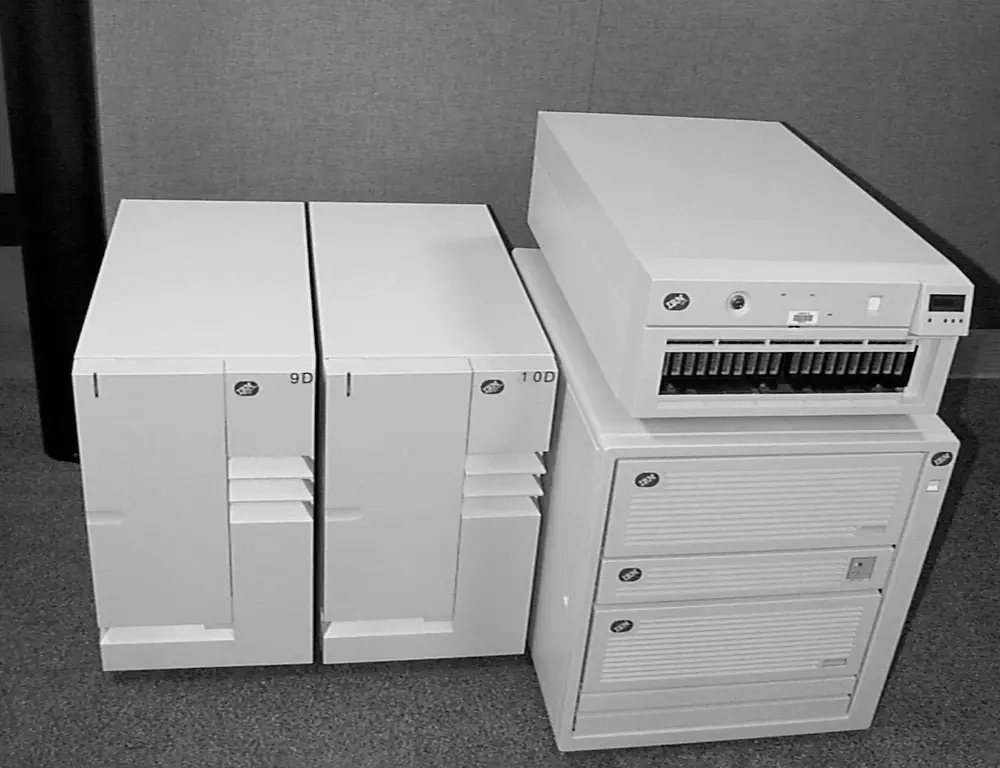
IBM RS/6000 servers running AIX in the ibm.com data centers in 1998, evidence of its high-end enterprise role. · Imagen: https://www.flickr.com/photos/epc / CC BY-SA 2.0 · Wikimedia Commons
Far from retiring, AIX keeps shipping new releases. **AIX 7.3** launched on 10 December 2021 with native support for **POWER9 and POWER10** processors, and has continued to be updated through successive *Technology Levels*. This longevity — more than three and a half decades in active service — makes AIX one of the most durable commercial Unix systems in history, in a league apart from more experimental projects like [Plan 9](/en/plan9) or the academic [MINIX](/en/minix).
## Curiosities
- The earliest AIX releases installed from **eight 1.2 MB floppy disks**. Today a single phone photo is larger than that entire operating system.
- AIX prides itself on being **one of the first systems with journaling**, a feature that would take years to reach the Linux and BSD worlds.
- Don't confuse AIX with **IBM i** (formerly OS/400): they are two distinct systems that coexist on the same POWER hardware.
- Despite being proprietary, AIX embraced free software early through its *Toolbox*, proving that no commercial Unix could ignore the open-source wave.
## Sources
- [IBM AIX on Wikipedia](https://en.wikipedia.org/wiki/IBM_AIX)
- [A Brief History of AIX (IBM Support)](https://www.ibm.com/support/pages/brief-history-aix)