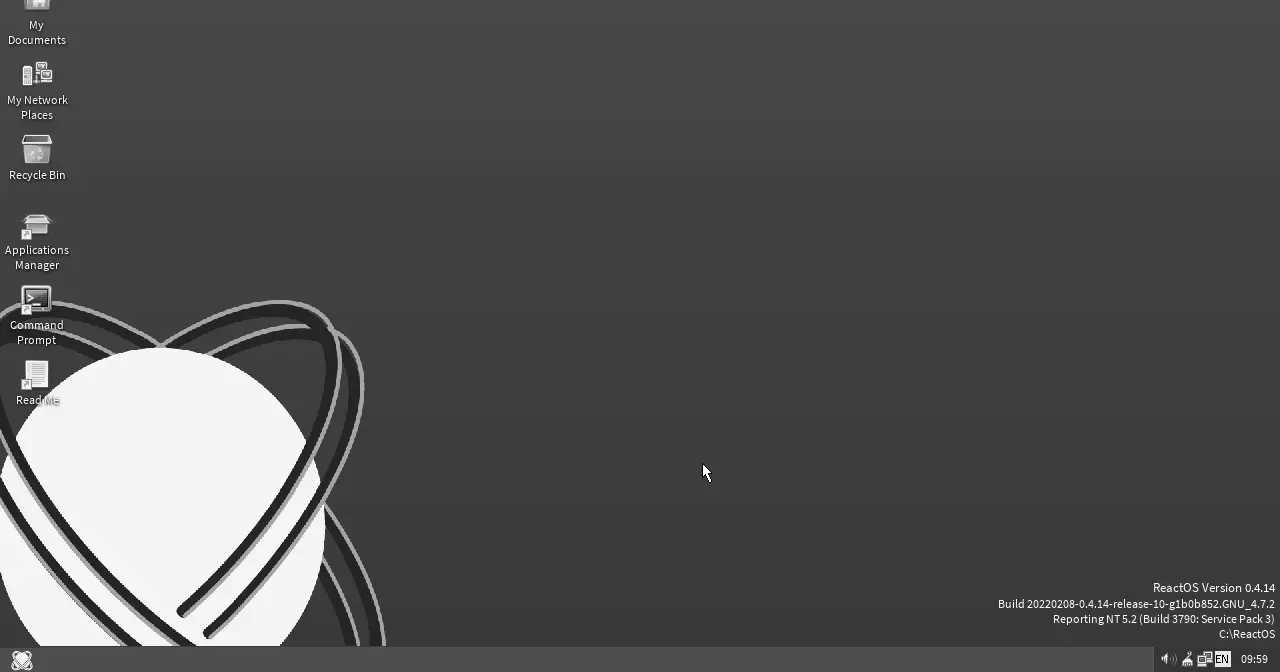
Picture a free, open-source operating system where you can install your usual Windows programs and device drivers without paying for a licence or depending on Microsoft. That has been the bold promise of ReactOS for decades now. It is not a mere visual imitation. It is a from-scratch recreation of the Windows NT architecture, able to run real applications and drivers thanks to binary compatibility.
From FreeWin95 to ReactOS
The story begins around 1996, when a group of free and open-source developers launched a project called FreeWin95, aiming to clone Windows 95. Enthusiasm ran high, but the effort got bogged down in endless debates about the system’s design. By the end of 1997 there was still not a single public build to show.
To revive the initiative, the members regrouped under the leadership of coordinator Jason Filby and made a pivotal call: rather than copy the already ageing Windows 95, they would aim to duplicate the functionality of Windows NT, a far more modern and robust foundation. That shift gave rise to a new name, ReactOS, and in February 1998 real development began with a new NT kernel and basic drivers.
What ReactOS is (and isn’t)
One common misconception is worth clearing up. ReactOS is not a layer running on top of Linux, nor a simple launcher for Windows applications. It is an independent operating system with its own kernel, designed to be binary-compatible with the programs and drivers written for Windows Server 2003 and later.
That said, ReactOS works closely with Wine on the user-space side. A large part of its user-mode components come from the Wine project, and the two teams have shared progress for years. The difference is that ReactOS provides what Wine cannot: a kernel of its own that can also load native Windows drivers.
The key versions
ReactOS has had a long and, frankly, slow road. The first bootable release, ReactOS 0.1.0, arrived in 2003 with only a command-line interface and no desktop. The 0.2.x series (2003-2006) brought the graphical shell, broader driver support and growing public attention.
Between 2006 and 2016 came the 0.3.x line. It added networking, SATA support via UniATA, x86-64 bring-up, MSVC build support, visual styles, and an early package manager that would evolve into today’s RAPPS (Applications Manager) for installing compatible software with ease.
In 2016, ReactOS 0.4.0 introduced a more Windows-like Explorer and kernel debugging with WinDbg. The project has kept the 0.4.x numbering ever since, across successive releases (0.4.14 in 2021, and the more recent 0.4.15 branch). Despite nearly three decades of work, it is still officially labelled feature-incomplete alpha software.
The curiosity: the 2006 freeze
The most dramatic chapter in its history was the 2006 code audit. Concerns emerged that part of the code might have derived from leaked Windows sources. The project’s response was uncompromising: it suspended open contributions, imposed a strict clean-room policy (reimplementing functionality blind, without ever looking at Microsoft’s original code) and audited everything that had been written.
This gave rise to another famous anecdote. Alex Ionescu, a star developer involved since 2004, argued that although certain Windows XP binaries had indeed been disassembled and studied, the code had not been copied but reimplemented: if two functions turned out identical, he claimed, it was simply because there was only one possible way to write them. Ionescu stepped down as a key developer in 2007.
A project still alive almost 30 years on
Far from dying off, ReactOS keeps moving forward. In 2026 the project celebrated three decades of life and reached striking milestones, such as natively running classic games that demand 3D acceleration. It reminds you how immensely hard it is to recreate something as complex as Windows from scratch while staying on the right side of the law.
For lovers of computing history, ReactOS shares its spirit with other recreation-and-nostalgia projects such as Haiku, the heir to BeOS, or systems that still evoke the era of MS-DOS and FreeDOS. And as a free alternative to Windows, ReactOS is arguably the most ambitious attempt ever undertaken.