
Some distributions get installed; others get built. Gentoo belongs firmly to the second camp. You don’t download prebuilt binaries here. You compile every package from source, tuned to your machine and your decisions. For many it’s the pinnacle of learning about Linux. For others it’s an obsession with control that borders on the monastic. Either way, its story is worth telling.
From Stampede to Enoch: the first steps
In the late 1990s, Daniel Robbins was a developer for Stampede Linux, a distribution that’s largely forgotten today. The existing packaging tools didn’t satisfy him, so he set out to start something entirely new from scratch. The project began in 1999 under the codename Enoch, with an ambitious goal: to automate the whole process, from downloading and patching sources to compiling, installing, and packaging them.
At least one version of Enoch went out publicly, 0.75, in December 1999. Around that time Robbins and other contributors were experimenting with a fork of the GCC compiler called EGCS, and that’s when “Enoch” was renamed Gentoo, after the fastest swimming penguin in the world, the gentoo penguin.
The FreeBSD detour and the birth of Portage
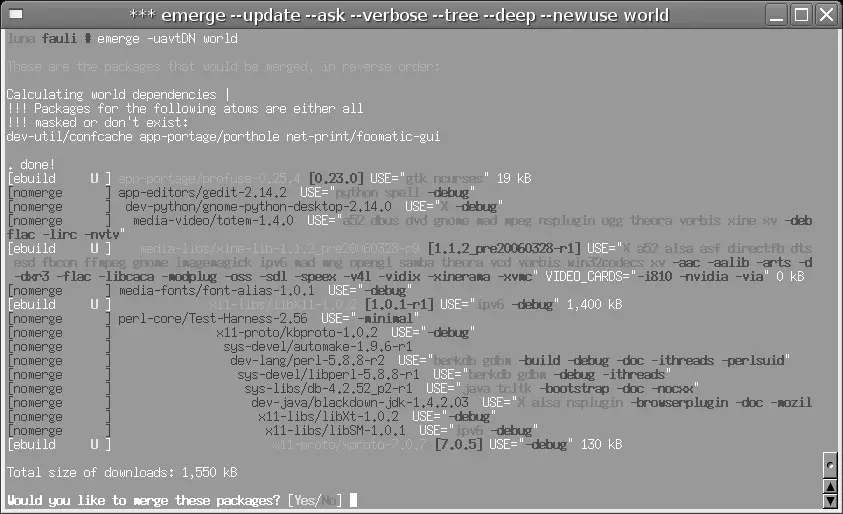
Gentoo’s story has a curious twist. Halfway through development, Robbins stopped the project and switched to FreeBSD for several months. It wasn’t surrender. It was research. FreeBSD’s ports system, which compiles software from source with real elegance, became his direct inspiration.
As he later explained, he decided to fold several FreeBSD features into his autobuild system to turn it into a true next-generation ports system. That system would eventually be named Portage, and its flagship command, emerge, would become the heart of the distribution. Where Debian and Ubuntu lean on binary repositories, Portage manages compilation recipes called ebuilds.
Gentoo 1.0 and the philosophy of total control
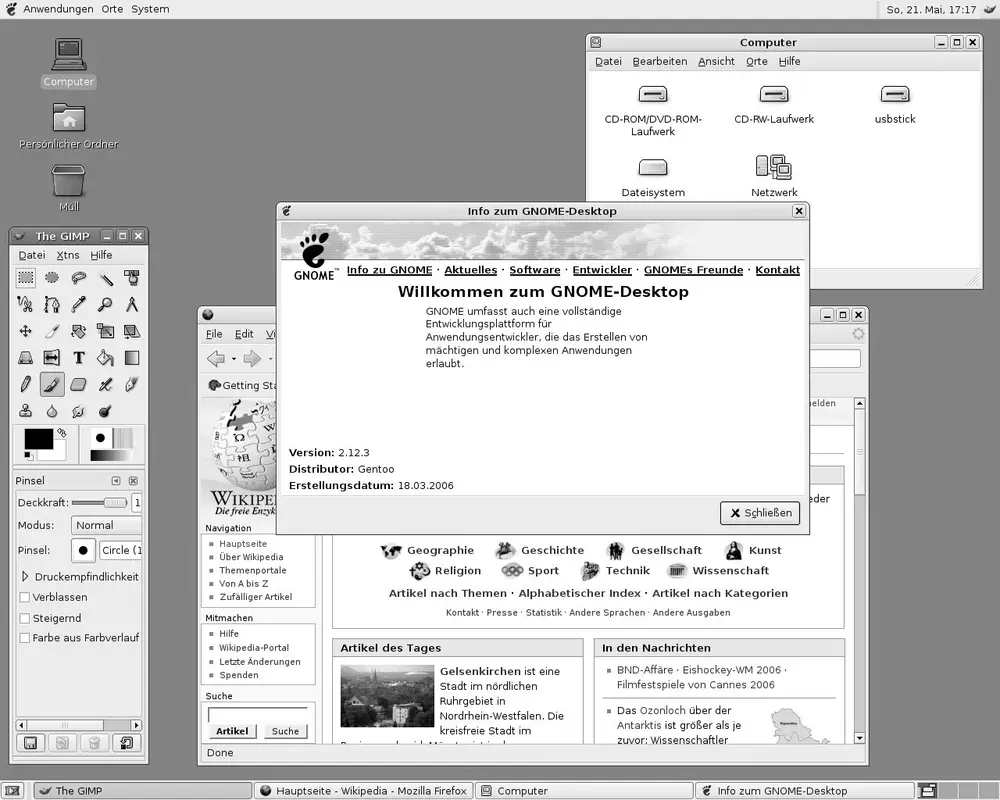
Gentoo Linux 1.0 was released on March 31, 2002. It brought along one of the distro’s most distinctive concepts: USE flags. These flags let you turn compilation options on or off for each package without recompiling the entire system. Want your media player without support for a codec you’ll never use? A USE flag strips it out. Need it tuned to your specific processor? The compiler handles that.
This is the essence of Gentoo: total control. Nothing gets included that you didn’t decide to include. The result can be a remarkably tuned system, paid for in hours of compilation. Against the immediacy of Fedora or the enterprise stability of RHEL, Gentoo bets on customization taken to the extreme.
Rolling release: always current, no big jumps
Gentoo is a rolling release distribution, just like Arch Linux. There are no numbered versions marking a clear before and after: the system updates continuously, and an emerge --sync followed by an upgrade keeps your machine on the latest available versions. You skip the traumatic migrations between major releases, but you pay for it with constant attention and an understanding of what’s happening under the hood.
In 2004 Robbins established the non-profit Gentoo Foundation, transferred all copyrights and trademarks to it, and stepped down as chief architect. The project passed into the hands of the community, which secured its continuity beyond its creator.
The legacy: from ChromeOS to education
Gentoo’s impact reaches far beyond its user base. In 2009 Google chose Gentoo as the foundation for building Chrome OS (and its open version, Chromium OS), the system that today powers millions of Chromebooks worldwide. Few niche distributions can claim such a lineage.
But perhaps its greatest value is educational. Installing Gentoo by hand, with no graphical wizard, forces you to understand how a Linux system really works: the boot process, the kernel, services, dependencies. It’s demanding and, at times, frustrating. That’s why many users come to it after getting comfortable with more accessible options like Linux Mint or Manjaro, only then taking the leap into compiling from source. Whoever survives a Gentoo installation comes out knowing more about Linux than any course could teach.
Conclusion
More than two decades after that Gentoo 1.0, the distribution stays true to its original spirit: no shortcuts, no imposed binaries, nothing you haven’t chosen. It’s not for everyone, and that’s exactly why it keeps a passionate community. If you want to understand Linux from the ground up and a few hours of compilation don’t scare you, Gentoo is waiting with its emerge and all its USE flags.