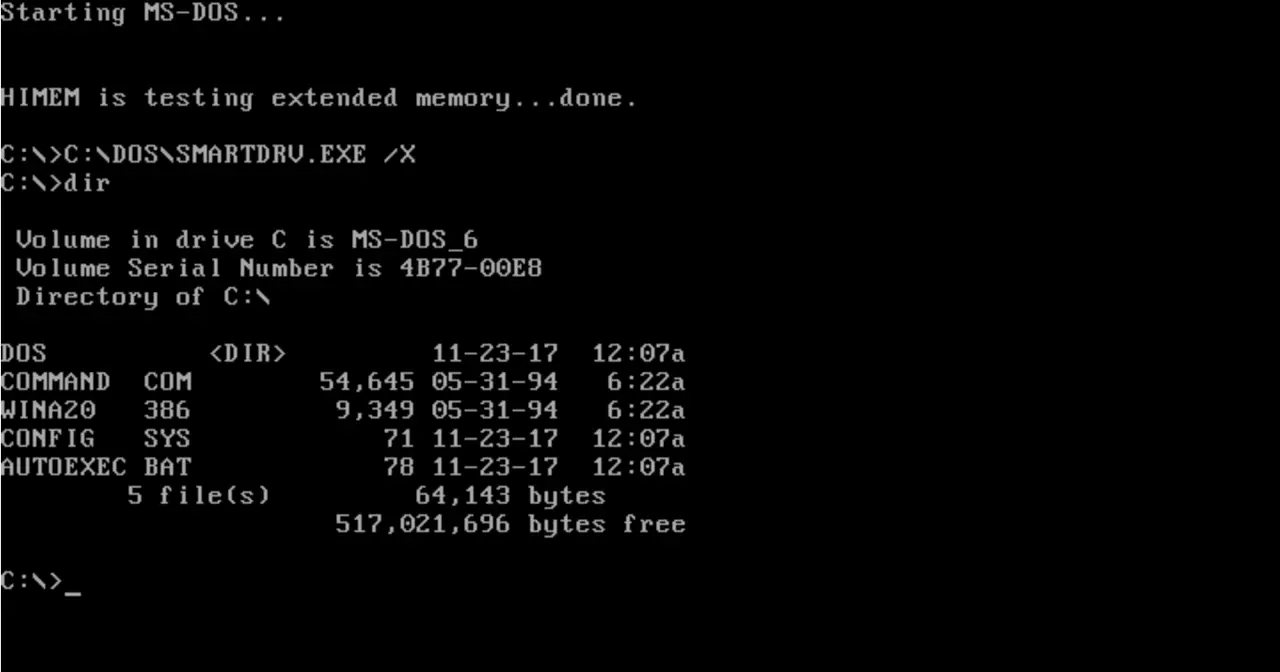
For more than a decade, a blinking command prompt was the gateway to personal computing for millions of people. That prompt belonged to MS-DOS, and its final chapter as a standalone product arrived in June 1994 with version 6.22. It was not the most revolutionary release, but it was one of the most peculiar: it was born, in large part, out of a multi-million-dollar patent lawsuit. This is the story of how the world’s most popular operating system bowed out in style.
From QDOS to MS-DOS: humble origins
To understand 6.22 you have to go back to 1980. IBM was looking for an operating system for its new personal computer, and Microsoft did not have one of its own. The solution was to buy 86-DOS, a system written by Tim Paterson for Seattle Computer Products and informally known as QDOS (Quick and Dirty Operating System). It was essentially a clone of CP/M ported to 8086 processors, with two notable differences: improved disk buffering and the FAT file system.
Microsoft bought 86-DOS for just $25,000, renamed it and licensed it to IBM. From there sprang the two historic branches: MS-DOS for clone makers and PC DOS for IBM machines. That single deal turned Microsoft into the giant we know today.
The road to version 6
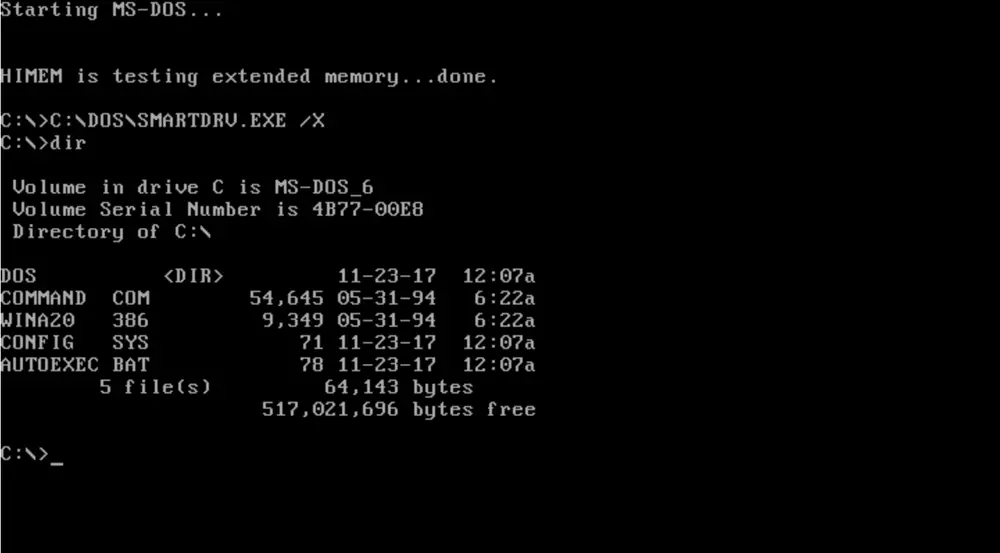
Throughout the 1980s, MS-DOS grew version by version: support for hard disks, subdirectories, networking and ever-larger drives. The 6.x branch, launched with MS-DOS 6.0 in 1993, was the richest in utilities. It included online help, upper-memory optimization with MemMaker, a basic antivirus and, above all, a marquee feature: DoubleSpace, a disk-compression tool that promised to double available space without touching the hardware.
MS-DOS 6.2 followed shortly after to fix serious DoubleSpace bugs and introduce ScanDisk as a replacement for the veteran CHKDSK. Everything seemed to be going well… until disk compression became a legal problem.
The Stac lawsuit and version 6.21
A company called Stac Electronics sold a compression product named Stacker and sued Microsoft for infringing its patents with DoubleSpace. In 1994, a California jury sided with Stac and ordered Microsoft to pay $120 million in damages. The case is regarded as one of the first major warnings about the reach of software patents.
The technical fallout was immediate: Microsoft had to release MS-DOS 6.21, a version that essentially removed DoubleSpace from computers. Users lost their flagship feature while the company searched for a way out.
MS-DOS 6.22 and DriveSpace
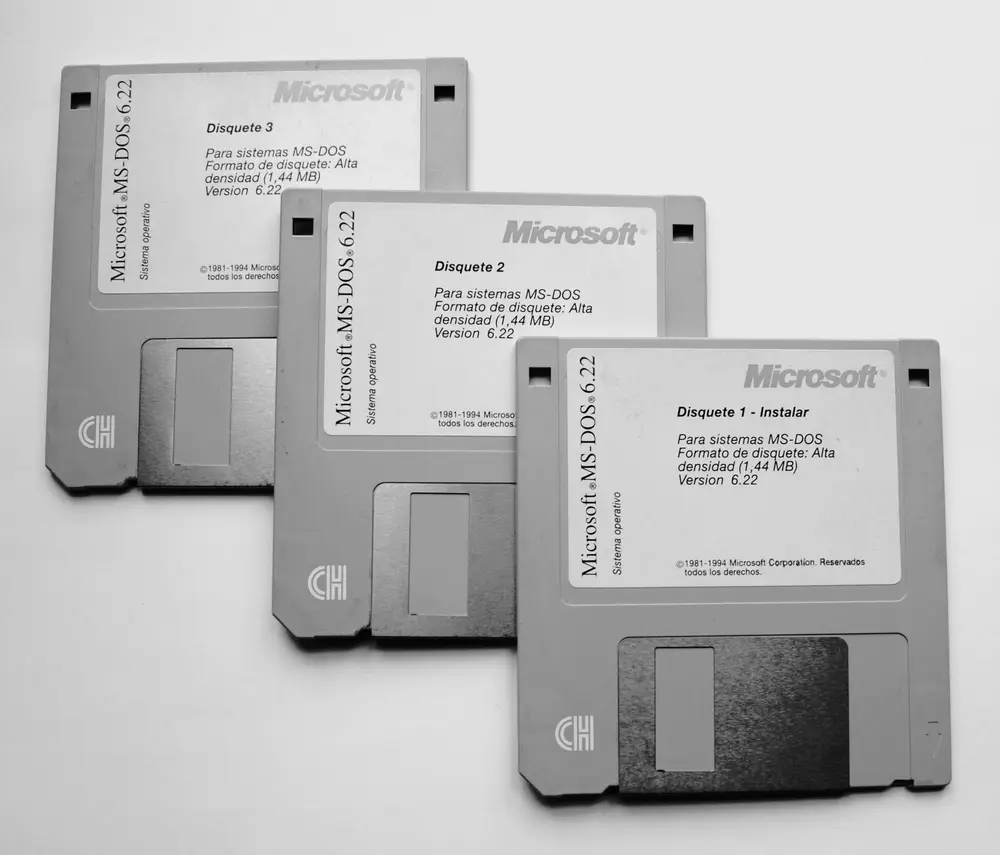
The solution arrived in June 1994. Microsoft completely rewrote its compression technology with a different algorithm that did not infringe Stac’s patents and rebranded it as DriveSpace. That was the great contribution of MS-DOS 6.22, offered as an upgrade to users coming from 6.0 or 6.2.
Version 6.22 was the last version of MS-DOS sold as an independent product. Later releases, 7.0 and 8.0, lived on as the hidden foundation that booted Windows 95, 98 and Me. The visible DOS, the black screen with the C:\> prompt, ended its standalone commercial life here.
Trivia and legacy
There is a delicious twist to this story: after losing the trial, Microsoft ended up paying Stac and even buying a stake in the company so it could bring its compression feature back. The legal enemy partly became a partner.
MS-DOS 6.22 became a cult release thanks to its stability. Many technicians kept it for years as a maintenance and boot environment, and it remains the favorite reference for nostalgics today. Its spirit lives on in free projects like FreeDOS, which keeps compatibility with that command-line world alive, and it competes in collective memory with historic alternatives such as DR-DOS.
Curiously, as DOS faded, another world was taking off: in 1991 a Finnish student had announced a free kernel that would give rise to the Linux kernel. The changing of the guard in personal computing was under way, but the MS-DOS command line left an indelible mark.