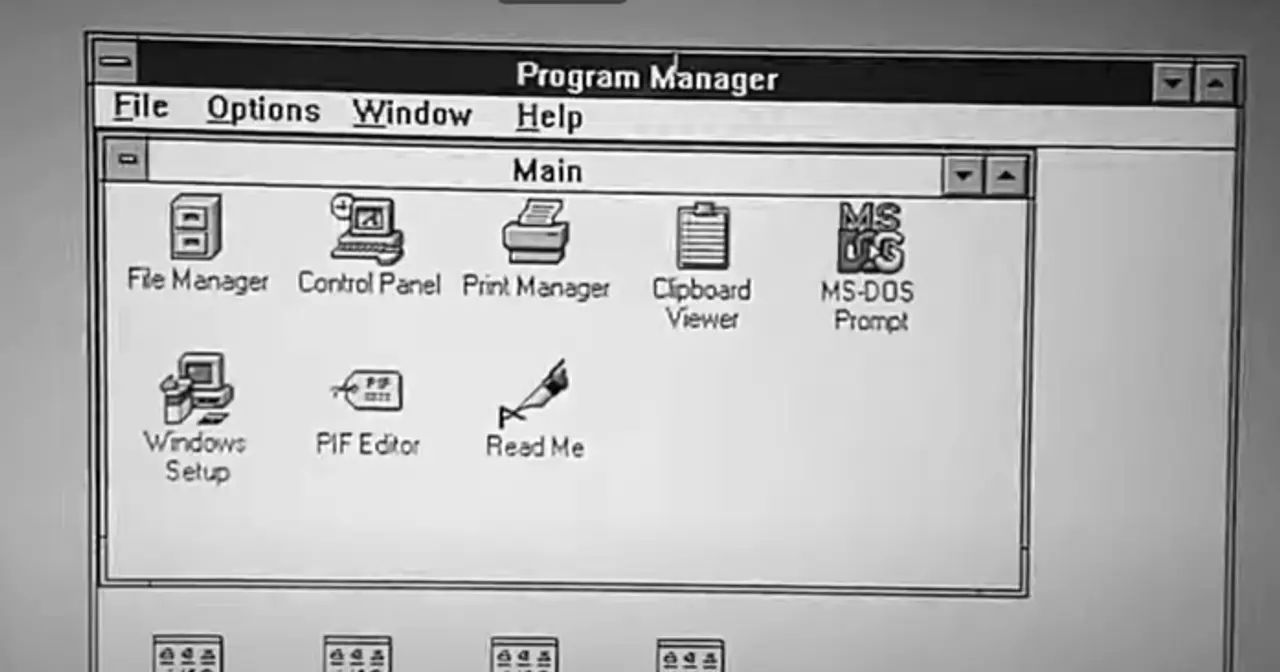
In the early 1990s, for most people a personal computer was still a black screen with a blinking cursor. Windows 3.0 changed that image forever. Released by Microsoft on May 22, 1990, it was the first version of Windows to sell by the millions and the one that convinced the world that the future of the PC lay in windows, icons and the mouse.
The Origins: From Experiment to Phenomenon
Windows did not begin with version 3.0. The first two releases, from 1985 and 1987, had been met with indifference: slow, limited and built as a thin graphical layer on top of MS-DOS. The real turning point came in 1988, when engineers David Weise and Murray Sargent independently decided to give Windows a protected mode, a technique that could break the old DOS memory barrier and deliver reliable multitasking.
That quiet work became the heart of Windows 3.0. For the first time, the system could genuinely take advantage of modern Intel processors instead of behaving as if every PC were an ageing 8088.
Windows 3.0 (1990): The First Major Success
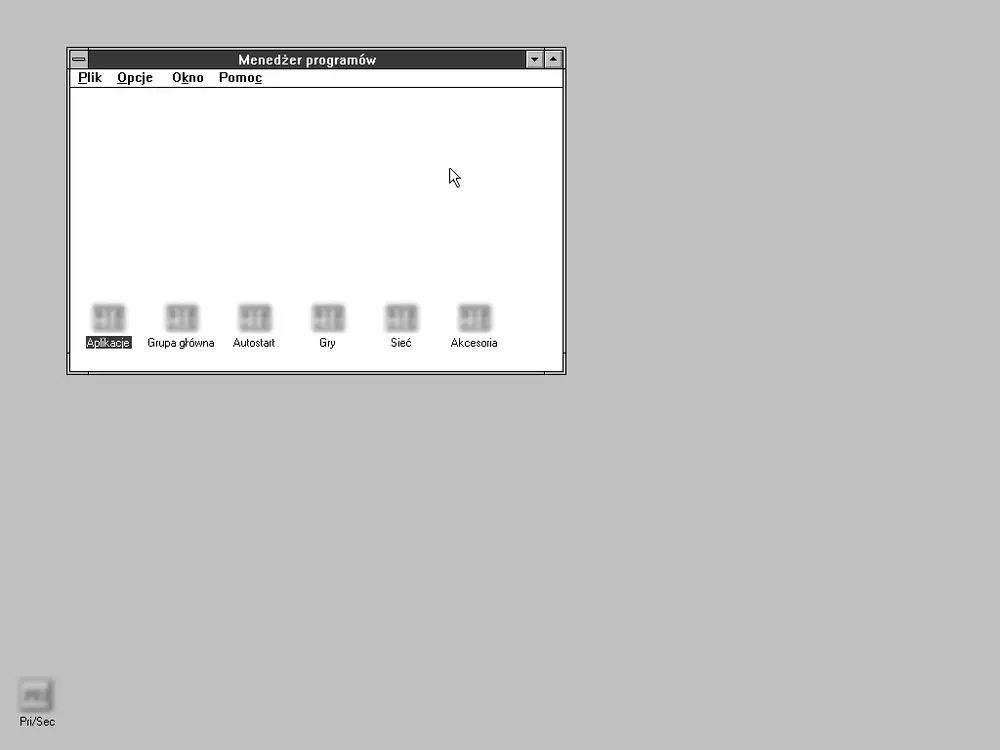
When Windows 3.0 reached the shelves, it offered something no previous version had managed: a coherent, pleasant interface. The Program Manager organized applications into groups of icons, while the File Manager replaced the crude MS-DOS Executive of earlier versions.
Under the hood, Windows 3.0 ran in several modes. Standard mode targeted machines with an 80286 processor, while 386 Enhanced mode exploited the protected mode and virtual 8086 mode of the 80386 chip, allowing several MS-DOS sessions to run simultaneously inside separate virtual machines.
The result was an unprecedented commercial triumph. Microsoft sold four million copies in the first year, and total sales eventually surpassed ten million. Windows 3.0 proved that the graphical interface was not a gimmick but the logical path forward for the PC.
Windows 3.1 (1992): Refinement, Typography and Multimedia
Barely two years later, on April 6, 1992, came Windows 3.1, a more polished release that became the de facto PC standard for years. Its biggest technical innovation was TrueType, a scalable font system built so Windows would no longer depend on third-party technology such as Adobe Type Manager. Windows 3.1 shipped with fourteen TrueType fonts, including two genuine classics still in use today: Arial and Times New Roman. At last, what appeared on screen matched what came out of the printer.
Windows 3.1 also embraced multimedia: it added Media Player and Sound Recorder, support for sound cards and CD-ROM drives, screensavers and compatibility with the Multimedia PC standard. In November of that same year, Microsoft added Video for Windows as a response to Apple’s QuickTime. Another quiet but historic addition was the Windows Registry, the configuration database still present in modern versions of Windows.
Windows for Workgroups and the 3.11 Branch
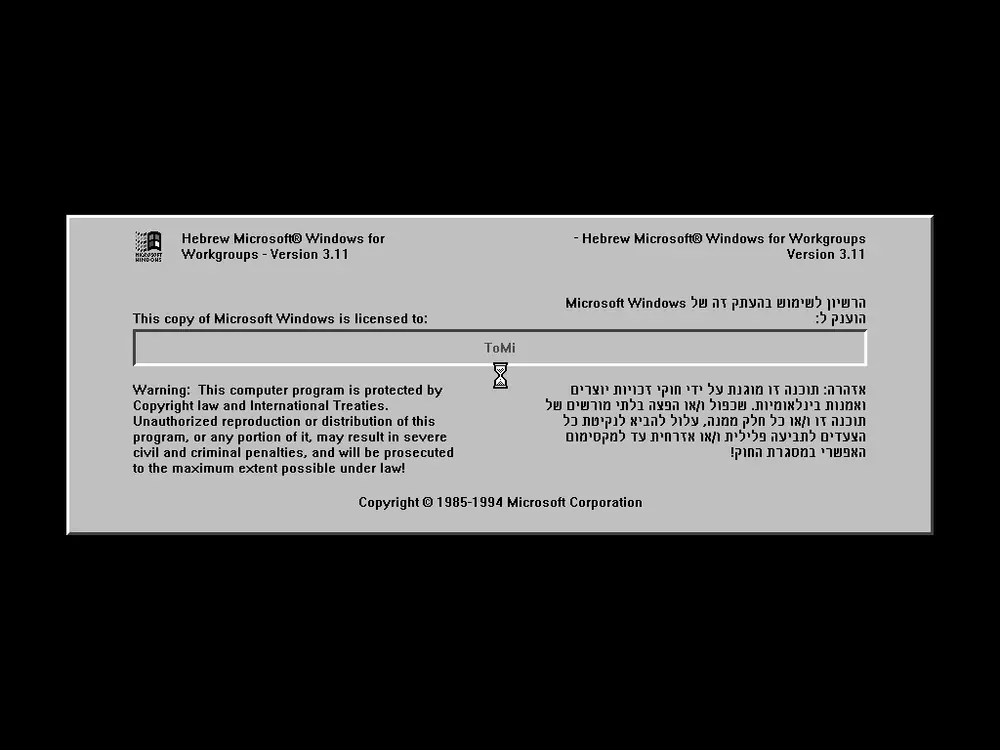
The family kept growing. Windows for Workgroups 3.1 (1992) added network file sharing via the SMB protocol over NetBIOS, and Windows for Workgroups 3.11 (1993) introduced 32-bit file access and performance improvements. These were, in essence, Windows aimed at small networked offices, at a time when connecting several computers was still a real challenge.
One key detail is worth remembering: despite its modern look, the entire 3.x branch remained a 16-bit environment that booted on top of MS-DOS. It was not a standalone operating system but a sophisticated graphical shell. The true break from DOS would not arrive until Windows 95 and the professional Windows NT line.
Curiosities of an Era
Windows 3.1 popularized Minesweeper, which replaced the old Reversi and became one of the most iconic images of the PC. The game hid a famous trick: by typing xyzzy, pressing the left Shift key and looking at the top-left corner of the screen, a single pixel changed color to reveal whether there was a mine beneath the cursor.
Another historical note is the enormous market share it achieved: for much of the decade, Windows 3.x was the rival to beat against alternatives such as OS/2, Apple’s Mac OS and the graphical environments of the Unix world. Its success cemented Microsoft’s dominance throughout the following years.
Today Windows 3.x is a museum piece, but its influence is undeniable: it was the system that pulled the PC out of the command line and finally placed it within reach of millions of people.