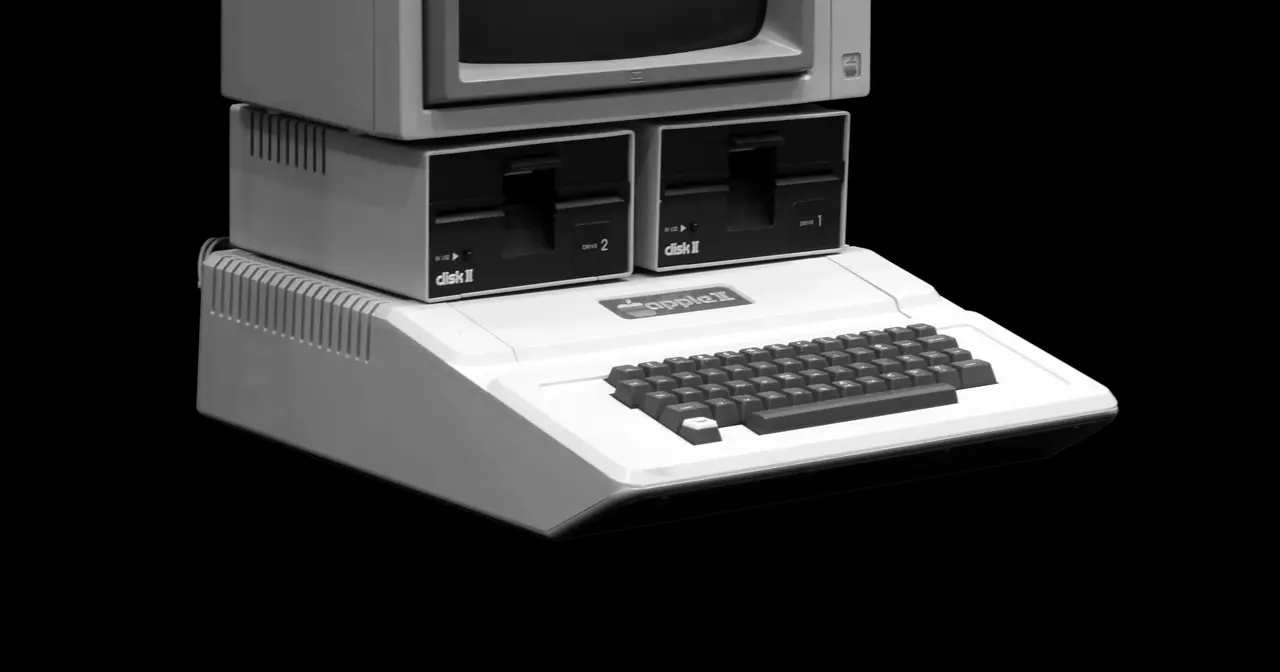
Few machines shaped the history of personal computing as deeply as the Apple II. Unveiled in April 1977, it was one of the first mass-market home computers, and for a decade and a half it defined what it meant to own a computer at home or in the office. Behind the hardware sat something just as important: the disk operating system that grew from Apple DOS 3.3 into ProDOS.
A computer without a disk (yet)
When Apple launched the Apple II in 1977, the machine had no floppy drive and no disk operating system. People stored their programs on audio cassette tapes, which was slow and unreliable. Late that year Steve Wozniak designed the controller for the Disk II drive. He thought he could write the DOS himself, but Steve Jobs chose to outsource the job.
On April 10, 1978, Apple signed a $13,000 contract with Shepardson Microsystems to develop the disk operating system. That gave birth to Apple DOS, which stayed in use from late 1978 until early 1983.
Apple DOS 3.3, the standard of an era
Apple DOS had three major releases: DOS 3.1, DOS 3.2 and DOS 3.3, each followed by a small bug-fix update. The best known and most widely used was DOS 3.3, in its 1980 and 1983 editions, which became the de facto standard for thousands of commercial and educational programs.
For all its popularity, DOS 3.3 was starting to show its age. It offered no subdirectories, handled only small volumes and was slow at reaching the disk. The computing world of the 1980s wanted something more modern.
ProDOS: a generational leap
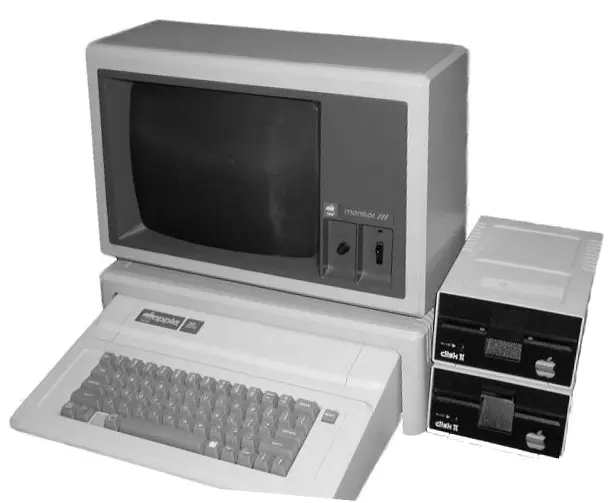
The answer arrived in October 1983 with ProDOS (Professional Disk Operating System), timed to the launch of the Apple IIe. Unlike the old Apple DOS, ProDOS did not start from scratch: it had its roots in SOS, the operating system of the ill-fated Apple III of 1980.
ProDOS fixed nearly every weakness of DOS 3.3. Its key improvements were these:
- Hierarchical subdirectories, allowing files to be organized in folders.
- Volumes of up to 32 MB, compared with the 400 KB of the older system.
- Disk access up to eight times faster on 5.25-inch floppies.
- Support for RAM disks on machines with 128 KB of memory or more.
- A standard way to reach ROM-based drivers on expansion cards.
It was not all upside: ProDOS limited filenames to 15 characters, versus the 30 of Apple DOS. Even so, the AppleWorks office suite (1984) gave people a solid reason to migrate, and by the end of 1985 little new software was being released for the older system.
ProDOS 8, ProDOS 16 and GS/OS
With the arrival of the 16-bit Apple IIgs, the ProDOS family branched out. The original version was renamed ProDOS 8 starting with release 1.2 (1986), becoming the last official operating system usable by every 8-bit Apple II; it was distributed from 1983 to 1993. Alongside it came ProDOS 16, a stop-gap solution for the IIgs that was replaced by GS/OS within two years. GS/OS debuted as System Software 4.0 in September 1988: written entirely in 16-bit code, it was already a full operating system handling keyboard input, video, mouse, printers and modems.
Trivia from a classic
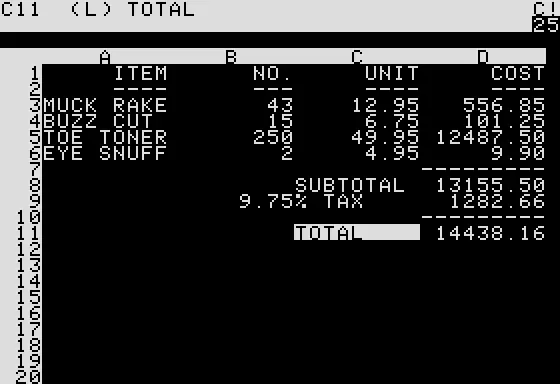
The Apple II had its “killer app”: the spreadsheet VisiCalc, released in October 1979. It was the first spreadsheet program for personal computers and turned the Apple II from a hobbyist’s toy into a serious business tool. More than 25% of the Apple IIs sold in 1979 were, by some estimates, actually bought to run VisiCalc.
The Apple II family sold around 6 million units over its 16-year lifespan, peaking in 1983 with one million machines. The Apple IIe was the longest-lived model in all of Apple’s history: it was manufactured for nearly 11 years with only minor changes. The last member of the family, the IIe card for the Macintosh, was not discontinued until October 15, 1993.
The legacy of the Apple II connects with the modern computing we cover on this site. Its desktop successor, macOS, inherited Apple’s philosophy, while the 8-bit home world lived alongside rivals such as IBM’s MS-DOS and creative machines like those running AmigaOS. Today, free projects such as FreeDOS keep alive the nostalgia of that disk-operating-system era.