Some operating systems die and get forgotten. Others refuse to disappear no matter how thoroughly the market buries them. BeOS is firmly in the second group. It flopped commercially, its company was sold off for a handful of millions, and its desktop never reached mainstream homes. Yet more than two decades after its final official release, you can still download a system that boots the same way, runs its programs, and keeps its philosophy intact. This is the story of how an idea ahead of its time outlived the very company that built it.
Be Inc.: A Former Apple Executive’s Gamble
BeOS didn’t come out of nowhere. It was the project of Jean-Louis Gassée, a former Apple executive who founded Be Inc. in 1990 with Steve Sakoman after leaving Cupertino. The goal was bold: build a modern operating system entirely from scratch, with none of the baggage or legacy code of the 1980s. To show it off, Be also designed its own hardware, the BeBox, a dual-processor machine that reached the market in 1995.
For its time, the approach was radical. The dominant platforms dragged along architectures designed to do one thing at a time, while BeOS was built to juggle many things at once without breaking a sweat. It wasn’t a patch on top of something old. It was a blank page.
A System Built for Multimedia
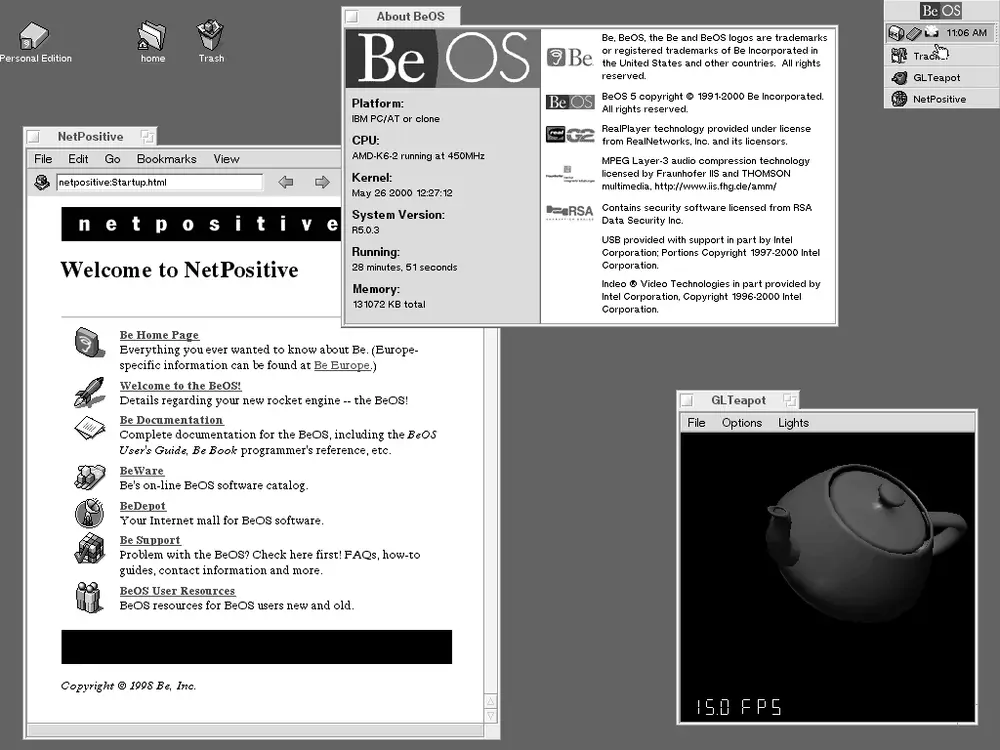
What made BeOS special wasn’t how it looked but what lived inside it. The system carried pervasive multithreading across every layer, from the kernel to the graphical interface, plus native symmetric multiprocessing (SMP) support. In practice you could play several videos, edit audio, and drag windows around all at once without the system choking, which in the 1990s felt close to sorcery.
Sitting on top of that was a remarkable file system, BFS, with journaling and the ability to treat metadata like a database. You searched for files by their attributes the way you’d run a query. That’s why so many remember it as the multimedia operating system par excellence. Where other platforms, including those built on the Linux kernel, would spend years polishing audiovisual performance, BeOS shipped with it solved out of the box.
The Great Irony: Apple Chose NeXT
Here comes the moment that turned BeOS into a legend. In the mid-1990s, Apple was in deep crisis and hunting desperately for a modern operating system to replace its aging classic Mac OS. Two candidates were on the table: BeOS and NeXTSTEP, the system from Steve Jobs’s company.
Apple went with NeXT in late 1996. Jobs’s powers of persuasion played a part, and so did the fact that BeOS was still incomplete, missing features as basic as printing. That single decision rerouted the history of computing. If you want to know where that road led, we trace it in our piece on how NeXTSTEP became macOS: that lineage flows straight into today’s macOS and shares UNIX roots with systems like FreeBSD. BeOS, meanwhile, lost its one shot at the big leagues.
Commercial Death and the Palm Rescue
Without Apple’s backing, Be tried to reinvent itself by steering BeOS toward so-called “Internet appliances,” but the business never took off. In 2001, Palm Inc. bought Be’s assets for around 11 million dollars. Palm was mostly after the engineering talent and the intellectual property, not the desktop itself. As a commercial product, BeOS was dead.
That could have been the end of the story. The curious part is that it was really the start of its second life.
Haiku: Rebuilding BeOS From Scratch, in Freedom
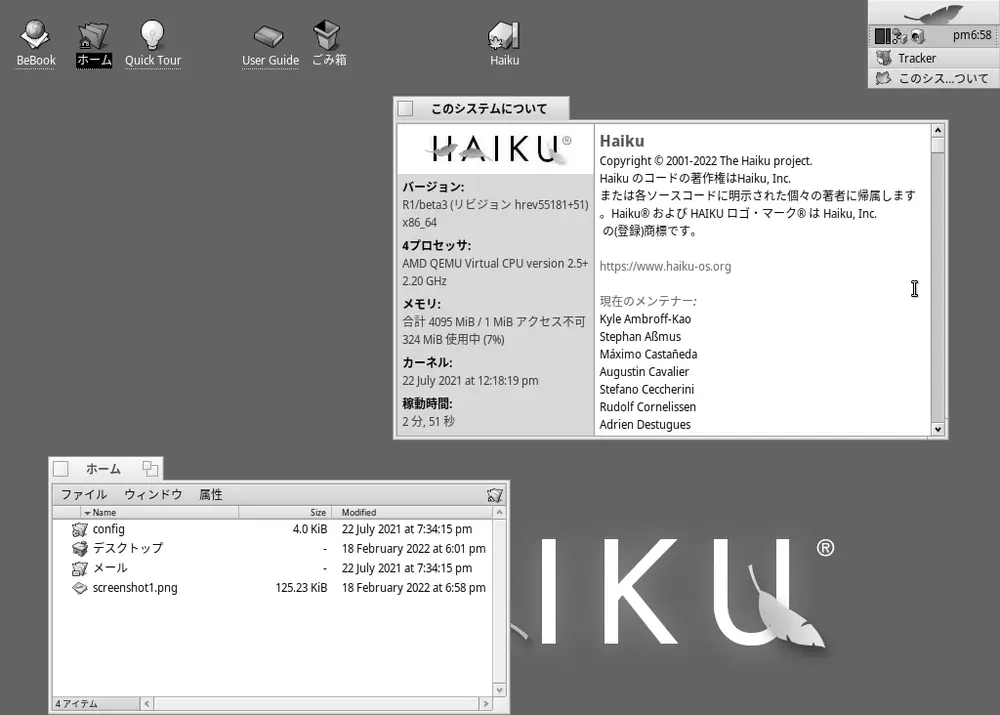
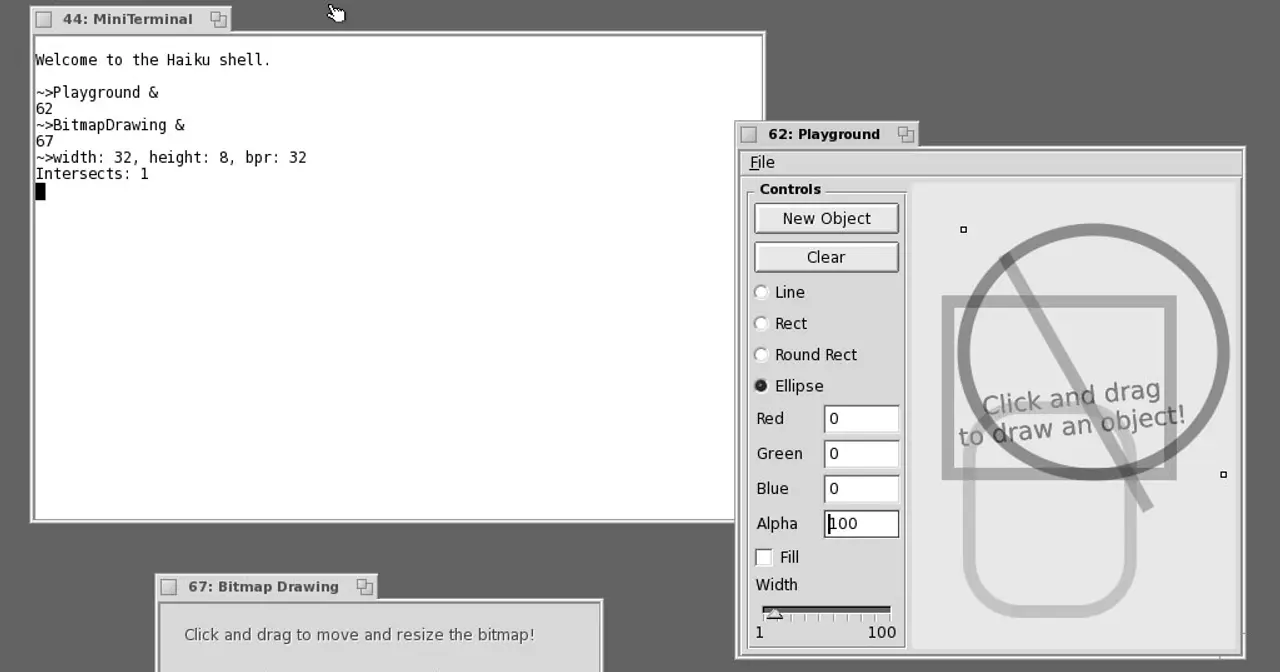
That same year, 2001, a group of enthusiasts unwilling to watch their favorite system die launched OpenBeOS, a free-software project with an almost quixotic goal: recreate BeOS from scratch, without touching its original code, while keeping binary compatibility with BeOS R5 applications. In 2004 the project was renamed Haiku to sidestep a trademark issue with Palm, and that’s the name we know it by today.
The road was long. The first alpha arrived in 2009, and the first beta didn’t land until 2018. That’s not the pace of large corporate-backed projects, but Haiku never aimed to compete on speed. It aimed not to betray the spirit of what it was recreating. For anyone coming from the distribution world, let’s be clear: Haiku is not based on Linux or BSD, the way Ubuntu, Debian, or Arch are. It’s an independent system, with its own kernel, rebuilding the soul of BeOS piece by piece.
A Loyal Community and an Open Future
Haiku is very much alive. Its current branch, R1 Beta 5, came out in September 2024 with serious improvements: a rewritten, far faster networking stack, better POSIX compatibility, VPN support, and hundreds of bugs squashed. It keeps the BeOS desktop, the BFS file system, the Tracker file manager, and its attribute-based query model, while porting modern applications like GIMP and Inkscape. There are builds for 32-bit and 64-bit processors, plus active work on architectures such as ARM and RISC-V.
Whoever tries it discovers something hard to put into words: a sense of coherence and lightness few modern systems convey. It isn’t trying to dethrone anyone. Its community, small but fiercely loyal, keeps alive an idea the market wrote off long ago. And as long as someone keeps coding for Haiku, BeOS will remain the system that refused to die.