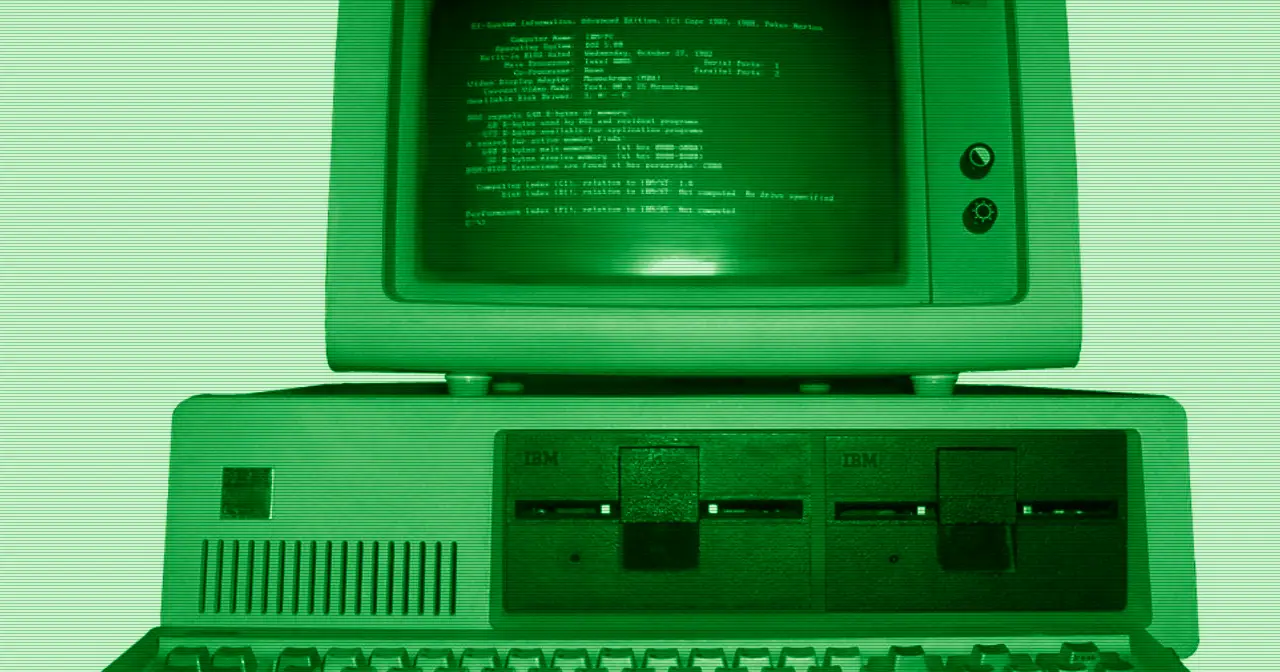
When IBM unveiled the IBM PC 5150 in August 1981, it needed an operating system to make the machine work. The answer was PC DOS 1.0, a piece of software that went on to shape personal computing for more than a decade. People often mix it up with MS-DOS today, but PC DOS had a life of its own and, oddly enough, stuck around for more years than Microsoft’s version.
The Origins: A Historic Deal with Microsoft
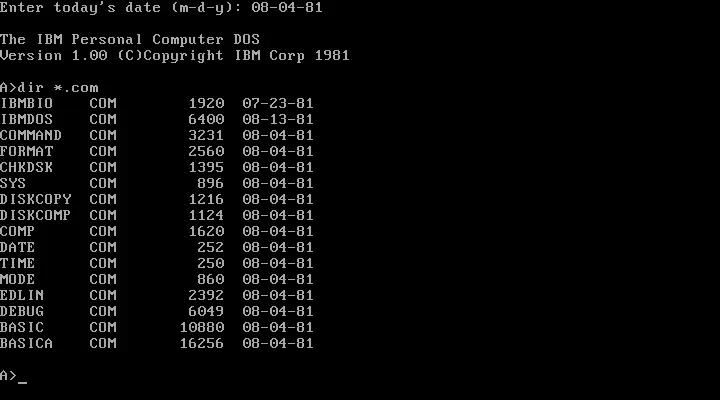
IBM did not build DOS from scratch. It was looking for an operating system for its new computer and ended up licensing the work of a small company called Microsoft. Microsoft, in turn, had bought 86-DOS (also known as QDOS, the “Quick and Dirty Operating System”) from Seattle Computer Products, written by Tim Paterson.
Microsoft licensed MS-DOS 1.10/1.14 to IBM, which in August 1981 offered it as PC DOS 1.0, one of three operating system choices for the IBM 5150. That kicked off one of the most influential business relationships in tech history. For years, PC DOS and MS-DOS were essentially the same product under two different brands.
The Joint Development Agreement
From 1985 on, IBM and Microsoft signed a Joint Development Agreement. Each company handed the other a fully developed version of the system. Most of the time the branded versions were identical, though here and there each company slipped in its own minor changes.
This stretch produced the versions that defined the DOS era: 2.0, which added subdirectories and hard-disk support; 3.0; and the influential 5.0, which sharply improved memory management. PC DOS competed and coexisted with alternatives such as Digital Research’s DR-DOS, which often shipped advanced features before the IBM–Microsoft duo did.
The Split: PC DOS Goes Its Own Way
The honeymoon ended in the early 1990s. Tensions between the two companies, made worse by the joint commercial failure of OS/2, led to a clean break. With PC DOS 5.00.1 the agreement began to come apart, and IBM entered the retail DOS market on its own.
In March 1993 Microsoft released MS-DOS 6, and that June IBM came back with PC DOS 6.1, developed independently. After that the paths fully diverged: IBM shipped IBM DOS 5.00.1, 5.02, 6.00 and later PC DOS 6.1, 6.3, 7, 2000 and 7.1, each with its own utilities and technical decisions.
PC DOS 7: The 1995 Technical Leap

PC DOS 7 arrived in April 1995 and was one of the most interesting milestones in the family. IBM bundled the REXX programming language, which let users write batch programs portable to other systems such as OS/2 Warp. That was a real oddity for a DOS of the era.
Other notable additions:
- XDF (Extended Density Format), a floppy format that stretched a standard 1.44 MB disk to 1.86 MB.
- Swapping out SuperStor compression for the well-known Stacker from Stac Electronics.
- The DYNALOAD command, which loaded device drivers without editing CONFIG.SYS or rebooting.
- An algebraic command-line calculator and plenty of tweaks to cut memory usage.
PC DOS 7 was the last major development before the team moved to Austin.
PC DOS 2000 and the End of an Era
The final retail version was PC DOS 2000, internally identified as PC DOS 7 revision 1. The name gives away its main job: making sure things kept working through the turn of the millennium, the famous Y2K bug. Released in 1998, it provided the fixes needed to handle dates beyond the year 2000, plus some extra language support. IBM later shipped an OEM release, PC DOS 7.1, with support for large partitions and FAT32 file systems.
Here is the funny part: while Microsoft had folded MS-DOS into Windows and all but dropped it as a standalone product, IBM kept PC DOS alive as a shipping system for far longer. Its legacy still lives on in free projects such as FreeDOS, which carries that era onto modern hardware and emulators.