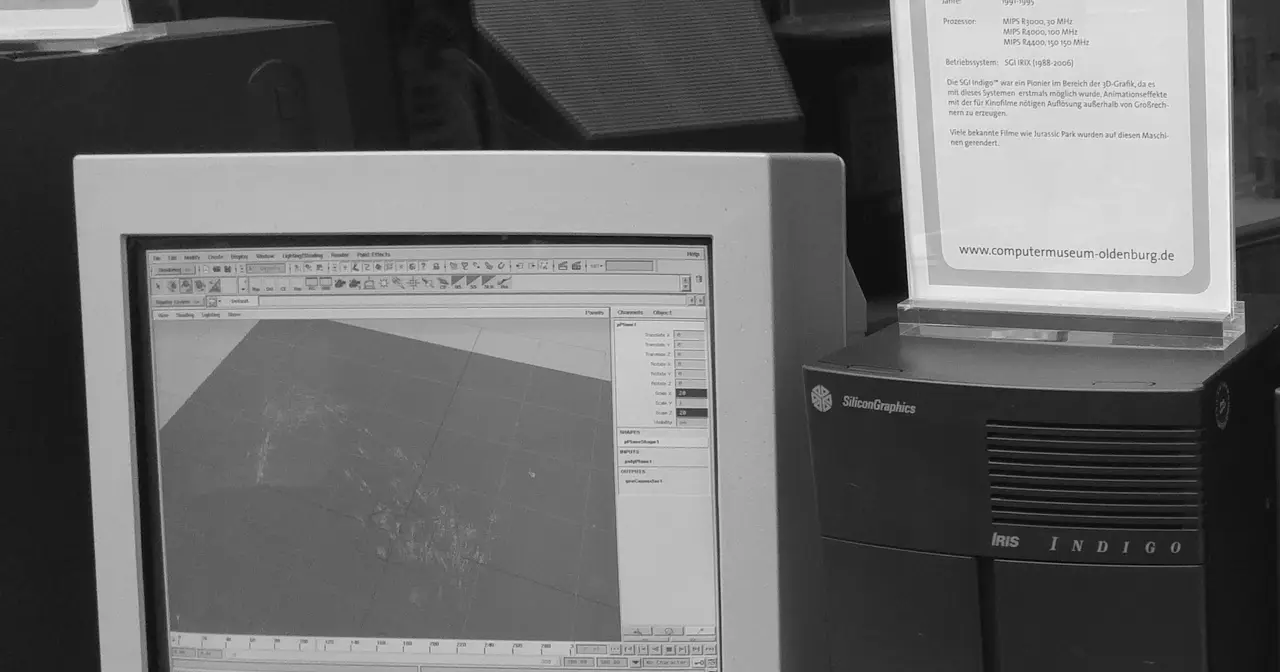
Back in the 1990s, anyone who wanted to create cinema-quality computer graphics, experiment with virtual reality or render photorealistic dinosaurs didn’t reach for an ordinary PC. They sat down at a Silicon Graphics workstation running IRIX. For more than a decade this legendary Unix ruled professional graphics computing.
What IRIX Was
IRIX was the operating system Silicon Graphics (SGI) built for its workstations and servers based on MIPS processors. Under the hood it was a flavor of Unix System V with BSD extensions, designed from the start to wring every bit of performance out of extremely high-end graphics hardware. While the rest of the world wrestled with text terminals, IRIX users were spinning 3D models in real time with a smoothness that felt like science fiction.
Compared to more austere Unixes, IRIX cared about the visual experience, with its 4Dwm window manager and polished graphical applications. It was Unix, yes, but with multimedia superpowers.
Origins and Early Versions
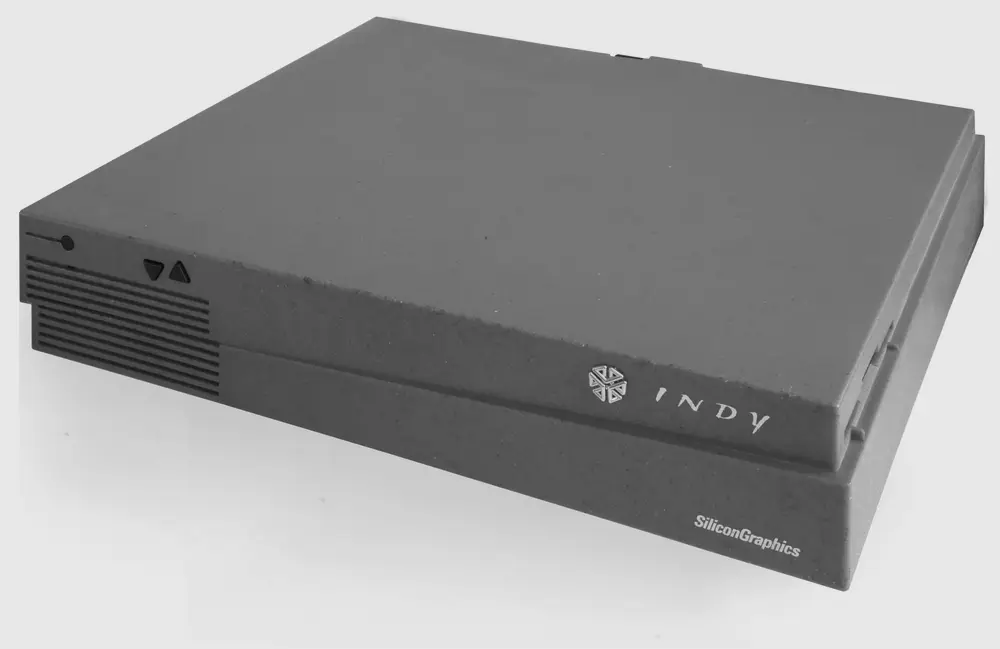
The IRIX name first showed up around 1988, with version 3.0 for the IRIS 4D series of workstations. Those early 3.x releases came from Unix System V Release 3 with 4.3BSD enhancements and shipped with 4Sight, SGI’s own windowing system.
The jump to IRIX 4.0 in 1991 was a milestone. SGI dropped 4Sight for the industry-standard X Window System (X11R4) and introduced the 4Dwm window manager that would define the platform’s look for years.
The Key Releases: From 5.0 to the Legendary 6.5
IRIX 5.0, released in 1993, pulled in features from Unix System V Release 4, such as ELF executables. Version 5.3 introduced one of SGI’s crown jewels: XFS, a high-performance journaling file system that the Linux kernel would later adopt and that is still used today in distributions like RHEL.
In 1994, IRIX 6.0 added support for the 64-bit MIPS R8000 processor, well ahead of an era that would take years to reach mainstream users.
The last major version, IRIX 6.5, shipped in May 1998 and became legendary for how long it lasted: SGI released new minor versions every quarter until 2005. The final release, IRIX 6.5.30, arrived in August 2006, and official support ended in December 2013.
The Secret Star of Jurassic Park
If the general public remembers IRIX at all, it’s thanks to the movies. In Jurassic Park (1993), young Lex sits down at a computer, sees a 3D interface spinning on screen and delivers the immortal line: “It’s a UNIX system! I know this!”
That three-dimensional interface was real. It was called FSN (File System Navigator, pronounced “fusion”), an experimental SGI application that displayed the file system as a navigable 3D landscape, with pedestals for directories and boxes for files, where height stood for size and color for age. It never went beyond a prototype, as SGI itself described it, yet it ended up immortalized. And it was no accident: SGI worked directly on the film’s digital effects, generated on its own machines.
SGI’s Graphics Empire
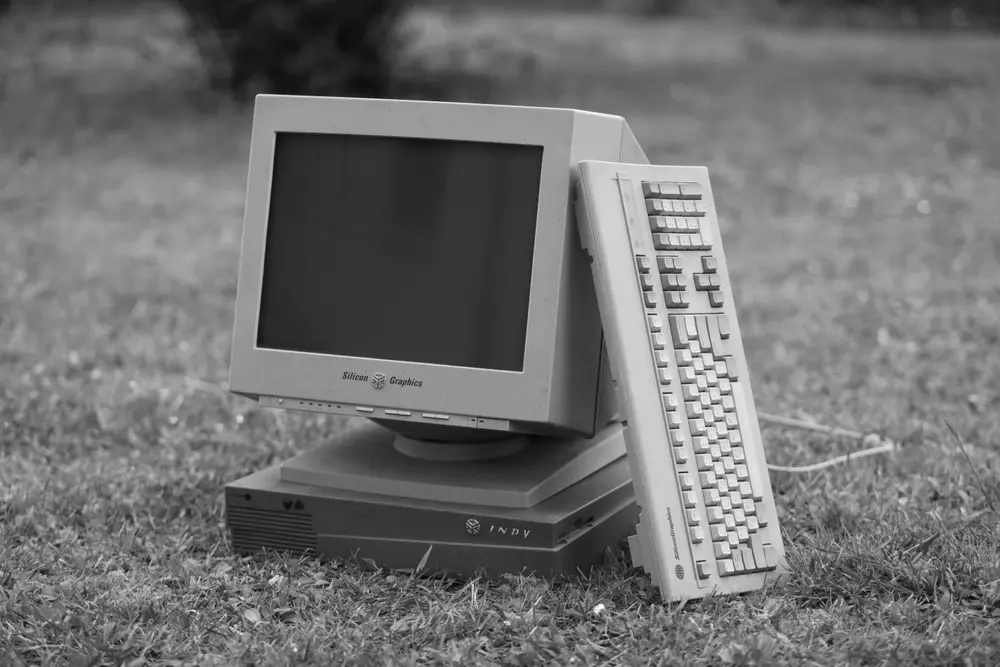
IRIX didn’t just triumph in Hollywood. It was the platform of choice for industrial design, scientific simulation, medicine, defense and, of course, visual effects and animation. Studios like Industrial Light & Magic built their magic on SGI workstations. SGI’s graphics technology, known as OpenGL, became an open standard that remains alive today across countless devices.
SGI was also a key player in the history of professional Unix, going head to head with Sun’s Solaris and IBM’s AIX in the high-performance workstation segment.
The Decline and the Legacy
IRIX’s success faded with the turn of the century. Ever more powerful PCs with cheap graphics cards, alongside the rise of Linux and free Unixes like FreeBSD, wore down SGI’s model of wildly expensive proprietary hardware. The company tried to reinvent itself, even migrating to Linux, but went bankrupt in 2009.
Its legacy, though, is enormous: XFS is still in use, OpenGL shaped graphics computing, and that Jurassic Park line turned IRIX into one of the most famous Unixes around, even though most people never touched it. Today a community of enthusiasts keeps the platform alive, restoring those blue and violet machines that once rendered the future.