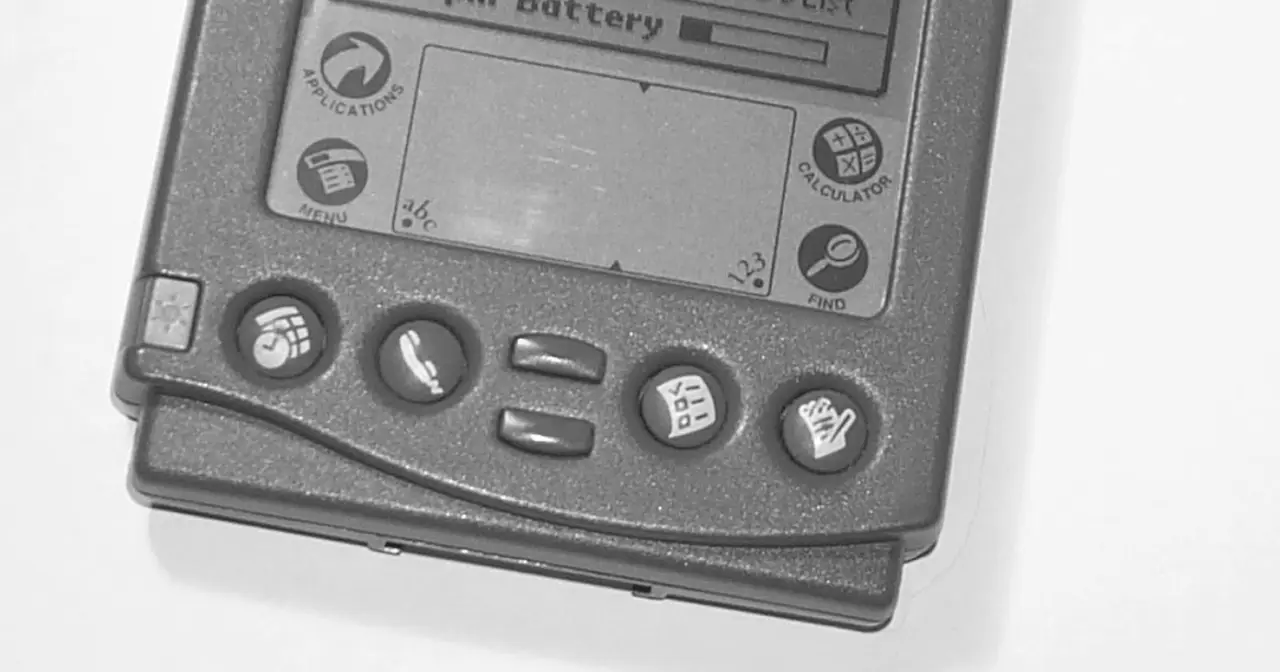
Long before the iPhone and Android took over our pockets, a small, grey, quiet device taught millions of people to trust their calendar, contacts and notes to a screen. That device ran Palm OS, an operating system that for more than a decade defined what portable computing meant.
The origins: Jeff Hawkins and Palm Computing
The story starts in 1992, when American inventor Jeff Hawkins founded Palm Computing, Inc., a company focused on software for the earliest personal digital assistants (PDAs). After working on the ill-fated Zoomer device, Hawkins took away one decisive lesson: teaching people to write a little differently was easier than teaching computers to understand free-form handwriting.
In 1995 Palm merged with U.S. Robotics, and Hawkins led the development of an in-house operating system for a new line of devices.
The PalmPilot and the birth of a phenomenon
On 10 March 1996, the PalmPilot 1000 and PalmPilot 5000 reached the market as the first PDAs to run Palm OS 1.0. They had a monochrome 160 × 160 pixel screen and a dedicated area for writing with a stylus.
The success was overwhelming. The system’s reliability and ease of use drove rapid adoption: by 1998 more than one million units had sold, capturing over 70% of the U.S. PDA market. A fun fact: the original name was simply Pilot, but a lawsuit from Pilot Pen Corporation forced a rebrand to PalmPilot and, later, just Palm.
Graffiti: learning to write for the machine
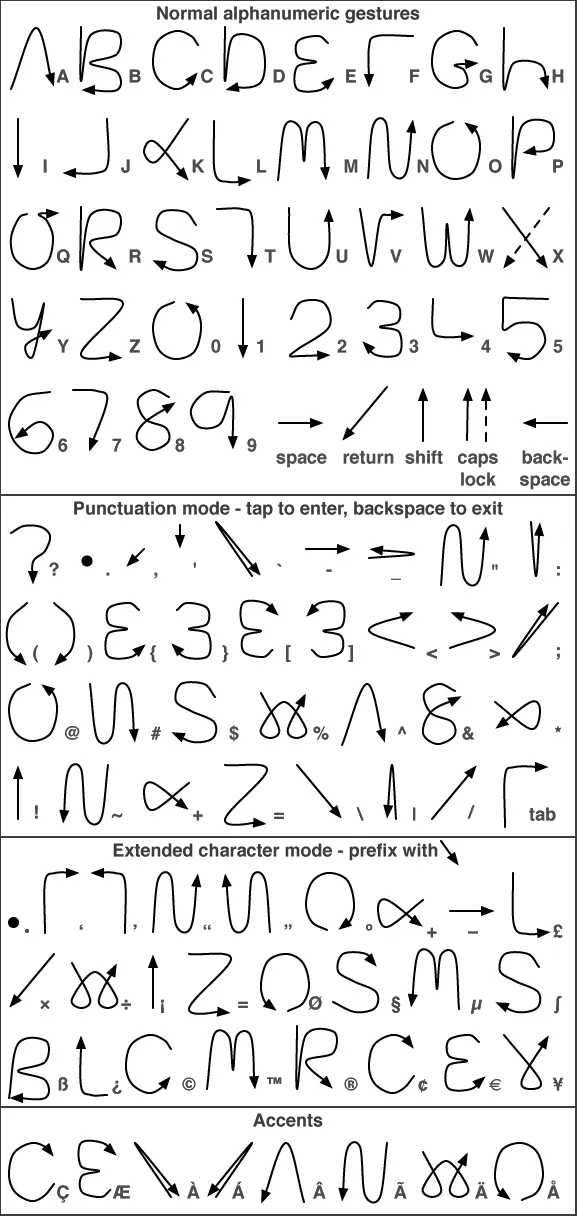
Palm OS’s big innovation was Graffiti, its handwriting recognition system. Instead of decoding any handwriting, Graffiti asked the user for a small effort: learning a simplified alphabet of single strokes. In return, it delivered astonishing speed and accuracy for the time.
Graffiti also left an interesting legal trail. Xerox held a patent for an input system called “Unistroke”, developed at the legendary Xerox PARC, and sued Palm for infringement. So in 2003 Palm released Graffiti 2, based on Communication Intelligence Corporation’s Jot technology, with strokes that looked closer to natural handwriting.
The key versions of Palm OS
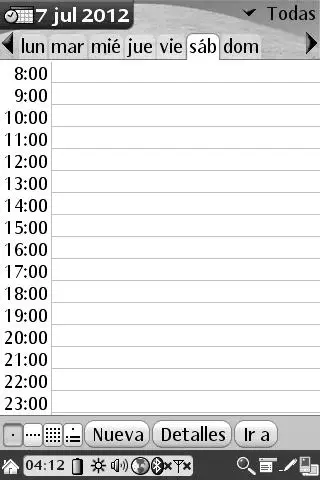
The system evolved quickly. Palm OS 2.0 (1997) added TCP/IP networking and backlighting. Palm OS 3.0 brought display improvements and new capabilities. The big leap came with Palm OS 5.0, which the PalmSource subsidiary unveiled in June 2002 and debuted on the Palm Tungsten T: it finally moved to ARM processors, opening the door to colour, sound and far more power.
Two branches with gemstone names followed:
- Palm OS Garnet (5.4), which added Bluetooth and resolutions up to 480 × 320 pixels, and debuted on the Treo 650 in 2004.
- Palm OS Cobalt (6.0), introduced in 2004 and based partly on the BeOS technology Palm had acquired. It offered true multitasking and memory protection, yet never won over manufacturers and barely reached commercial devices.
The decline and the leap to webOS
By the mid-2000s the landscape had shifted. ACCESS acquired the technology and rebranded it as Garnet OS, while Palm, Inc. bet on a new path. In January 2009 the company unveiled webOS, a system built on Linux and web technologies that debuted on the sleek Palm Pre. It was the final farewell to classic Palm OS.
The legacy, though, endures. Concepts like one-button PC synchronisation (the famous HotSync), task-focused touch interfaces and the idea of a truly pocketable personal computer paved the way for modern smartphones.
A place in computing history
Palm OS belongs to that lineage of systems that defined an era and then handed over the baton, as NeXTSTEP, BeOS —whose spirit lives on today in Haiku— or the long-lived QNX did in the embedded world. Against rivals such as Windows in its CE variant, Palm proved that less could be more: a simple, fast, focused machine won the hearts of millions of users. Today its memory lives on in emulators and in the minds of a whole generation that learned to write in strokes.