
Some operating systems are famous, and some are important, and the two lists don’t always overlap. Almost everyone has heard of Linux, of Ubuntu, or of Windows. Ask those same people what FreeBSD is, and most will just shrug. Yet every time you stream a series on Netflix, fire up a PlayStation, or send a message on WhatsApp, there’s a decent chance your request is passing through a FreeBSD machine. Let’s talk about how this quiet veteran became the secret weapon of some of the biggest tech companies on the planet.
What FreeBSD is, and why it isn’t Linux

Let’s clear up a common mix-up first: FreeBSD is not a Linux distribution. It’s a direct descendant of UNIX, specifically of the Berkeley Software Distribution (BSD) developed at the University of California, Berkeley, starting in the 1970s within the Computer Systems Research Group (CSRG). Out of that lineage, and as a continuation of the 386BSD project, FreeBSD was born in 1993, with its 1.0 release shipping on CD-ROM in December of that year.
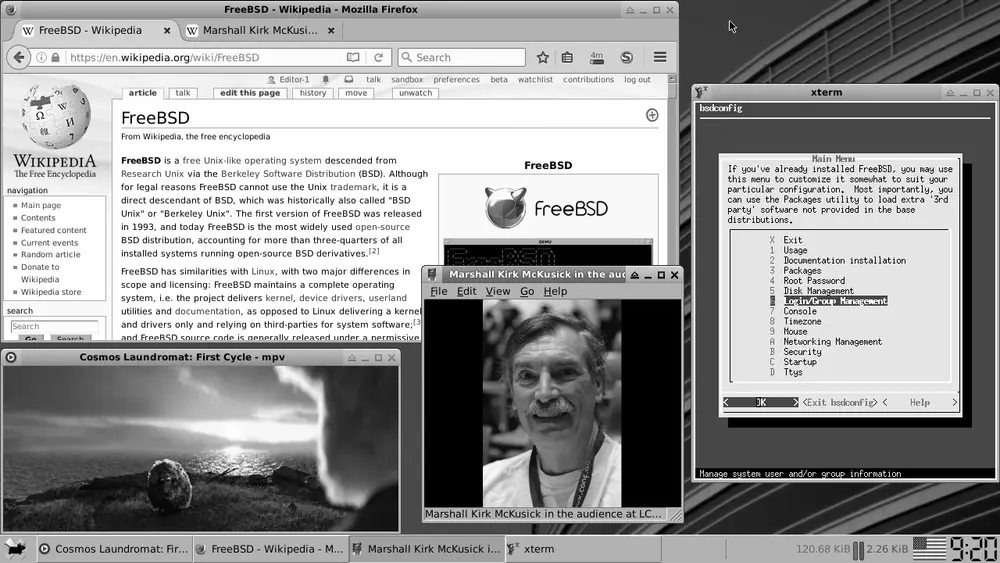
The difference from Linux runs deeper than the family tree. Linux, strictly speaking, is just a kernel, and distributions bundle it with software from all sorts of sources. FreeBSD is developed as a complete, unified system: the kernel, the userland utilities, and the “ports” collection for installing thousands of programs are all maintained together, by the same project, under one coherent vision. That cohesion is exactly the kind of thing systems engineers fall for.
The license that changes everything
If a single factor explains FreeBSD’s corporate adoption, it’s the license. The BSD license is permissive: you can take the code, modify it, fold it into a closed commercial product, and ship it, with no obligation to release your changes. That contrasts with copyleft licenses like the GPL used by the Linux kernel, which require you to share modifications under the same terms.
For a company building a proprietary product on a solid foundation, that freedom is worth its weight in gold. You start from a mature UNIX, battle-tested over decades, tune it to your exact needs, and keep your trade secrets to yourself. No wonder so many companies that need total control over their technology stack end up looking at this side of the family, alongside cousins like OpenBSD and NetBSD.
Netflix: the fastest CDN in the world
The most spectacular case is probably Netflix. Its content delivery network, Open Connect, leans on FreeBSD to serve video at a scale that’s hard to even picture. These are the servers that keep video “close” to you, inside your ISP’s network, ready to deliver it without choking the wider internet.
But Netflix is no passive user; it’s an active contributor to the project. Its team has upstreamed major kernel improvements, including deep work on the sendfile operation and, above all, TLS encryption inside the kernel itself (kernel TLS, or KTLS). Pushing encryption into the kernel lets them eliminate memory bandwidth bottlenecks. With these optimizations, Netflix has served on the order of 375 gigabits per second from a single box while using just over half of its CPU. There’s something nice about that collaboration: the company improves its own product, and everyone running FreeBSD benefits in the process.
Sony and the PlayStation: UNIX under the hood
Here’s where a lot of gamers get surprised. The operating system of the PlayStation 4, known as Orbis OS, is based on FreeBSD, specifically a build derived from FreeBSD 9.0 (released in early 2012). The PlayStation 5 kept that same BSD lineage.
Why did Sony go this route? For several very practical reasons. A UNIX-like environment resembles the PCs and servers where games are actually developed, so engines and tools port over with far less hassle. The permissive license fits perfectly with a closed, heavily protected device. And FreeBSD’s maturity makes it possible to build a tightly controlled security model, with games running in sandboxed environments. Millions of people have probably spent years gaming on a UNIX descendant without ever realizing it.
WhatsApp and the firewall in your office
WhatsApp’s story is another engineering gem. In its early years, its infrastructure paired FreeBSD with the Erlang language to sustain enormous numbers of simultaneous connections. The team fine-tuned the system, adjusting kernel parameters such as file and socket limits, until a single server could handle on the order of two million connections at once. With a tiny engineering team, they scaled messaging to staggering numbers on top of this base.
And it doesn’t stop there. FreeBSD is also the heart of products that may be closer to you than you think:
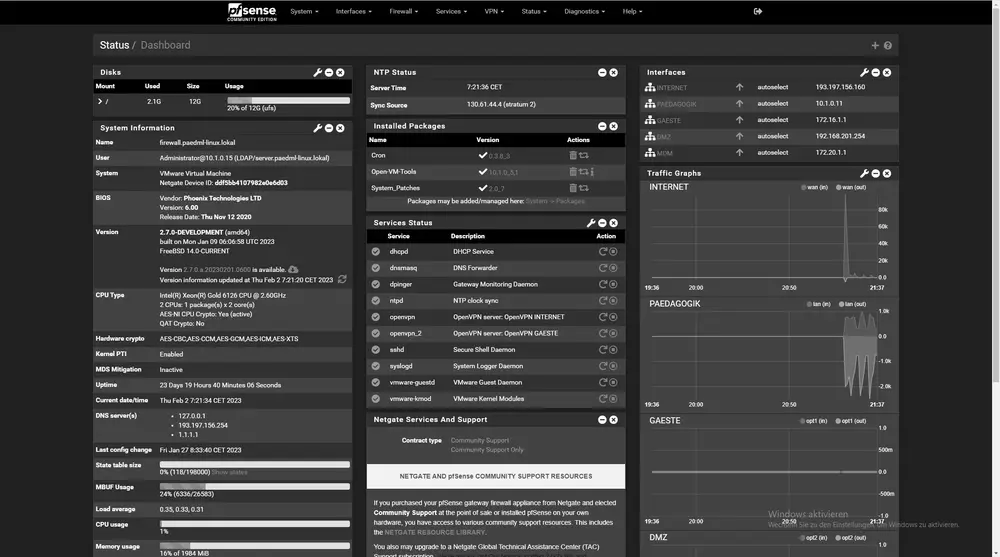
- pfSense and OPNsense, two of the most popular open-source firewalls in the world, are built on FreeBSD. If your office runs one, you already know FreeBSD.
- High-capacity storage and networking appliances pick FreeBSD for its network stack and its file system.
- Its ports collection and the
pkgpackage manager make it easy to build custom servers.
Quiet, but indispensable
FreeBSD has no loud marketing, no ad campaigns, and rarely makes the headlines. Its fame is modest next to Linux or the big commercial names. But don’t mistake that quietness for irrelevance: this is one of the silent pillars of the internet.
The next time someone tells you free software and UNIX are relics of the past, remind them that your favorite show, your console, and a good chunk of your messages all pass through a system born in Berkeley more than three decades ago. If you want to get to know it up close, its profile on LinuxGratis is a great place to start understanding why the people in the know choose it again and again.