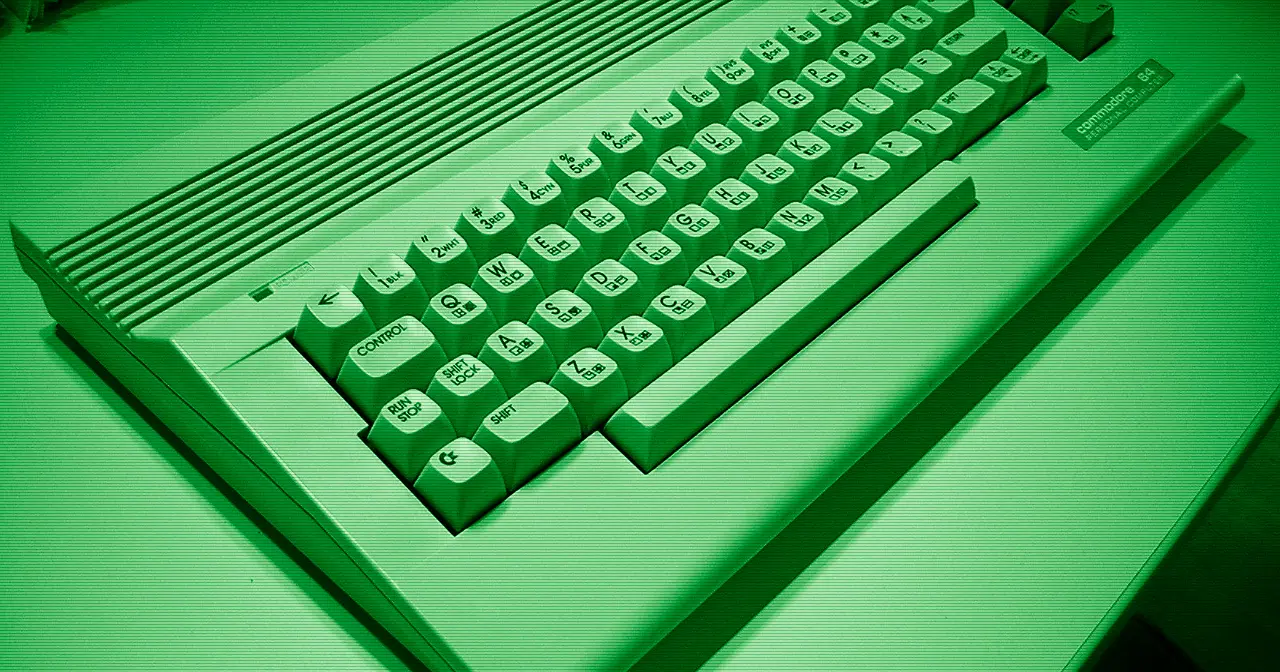
Picture the graphical interfaces of the 1980s and your mind probably jumps to the Macintosh or, at a stretch, the earliest builds of Windows. Hardly anyone remembers that a humble home computer with just 64 kilobytes of RAM, the Commodore 64, once ran a full graphical environment with a mouse, windows, pull-down menus and even desktop publishing. That small miracle went by the name GEOS, short for Graphic Environment Operating System.
The origins: Berkeley Softworks
GEOS showed up in 1986 from Berkeley Softworks, a company Brian P. Dougherty had founded in 1983 after a stint as an engineer at Mattel. The team behind the system —Jim DeFrisco, Dave Durran, Michael Farr, Doug Fults, Chris Hawley, Clayton Jung and Tony Requist, among others— had cut their teeth on machines as tight as the Atari 2600 console. That habit of squeezing modest hardware made all the difference, because GEOS pulled off what looked impossible on 64 kilobytes and an 8-bit processor running at barely 1 MHz.
The technical challenge was steep. The Commodore 64 didn’t even ship with a graphical operating system, just its KERNAL in ROM and a BASIC interpreter. On top of that GEOS layered an entire desktop, file management, printer support and a proportional font system, all loaded from a floppy disk.
Key versions
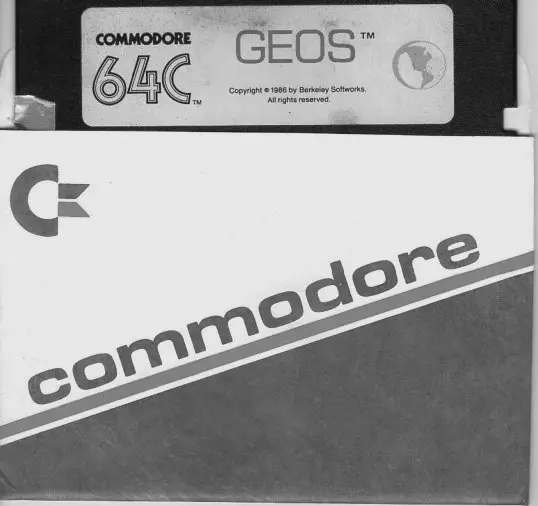
The first release, GEOS 1.0, landed in March 1986 for the Commodore 64 only. A few months later, in August, came 1.2, aimed at better stability and support for peripherals like printers.
In 1987 Berkeley Softworks shipped GEOS 128, tuned for the Commodore 128, which put its 128 kilobytes of memory to work speeding up disk operations and giving you a roomier desktop. In 1988 the system moved to a different platform with a version for the Apple II, which proved the idea wasn’t tied to one machine.
The big technical leap was GEOS 2.0, released in November 1988 for the Commodore 64 and 128. This version handled RAM expansion units of up to 512 kilobytes —good for disk caching and a form of virtual memory— and worked with as many as four floppy drives at once. The final official release from Berkeley Softworks was GEOS 2.5, published only in Germany in 1993 alongside the Markt & Technik publishing house.
A complete graphical suite
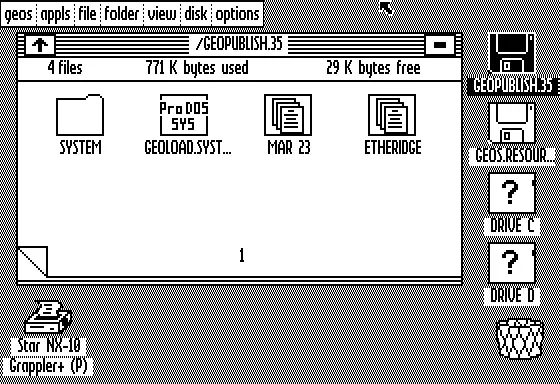
What lifted GEOS above the curiosity bin was its software. The system came with geoWrite, a WYSIWYG word processor with proportional fonts, and geoPaint, a bitmap drawing program. Later came geoPublish, a desktop publishing app that was surprisingly capable for its day. It was no Aldus PageMaker, but it let people lay out newsletters and documents at a level nobody expected from a living-room computer.
The philosophy echoed what far pricier systems like Mac OS or the AmigaOS graphical environment were doing, only on hardware ten times cheaper.
Real-world trivia
The juiciest anecdote is a marketing one, and it’s documented: Brian Dougherty himself claimed Berkeley Softworks ran its own business on its own software, on 8-bit Commodore computers, for several years. The company quite literally wrote its documents in geoWrite.
Here’s another stat that raises eyebrows. At its peak GEOS became the third most widely shipped microcomputer operating system in the world by units, behind only MS-DOS and Mac OS. Not bad for something that fit on a single floppy disk.
The GEOS story didn’t end with its creators. Berkeley Softworks eventually became GeoWorks and built a 16-bit version for the PC. And the community kept the 8-bit GEOS alive for decades: extensions like Wheels added multitasking, resizable windows and support for hard drives and RAM expansions of up to 16 megabytes on 1980s hardware. In 2016 the source code of GEOS 2.0 went public, closing the loop on a project that showed how much you could squeeze out of very little.