
Few names in the Linux world carry as much historical weight as Red Hat. What started as a student’s side project in the mid-nineties grew into a cornerstone of enterprise infrastructure across the planet. Tracing the history of Fedora and Red Hat Linux is, to a large extent, tracing how free software went from a hobbyist pastime to running the world’s data centers.
The Red Hat: 1994 and the origins
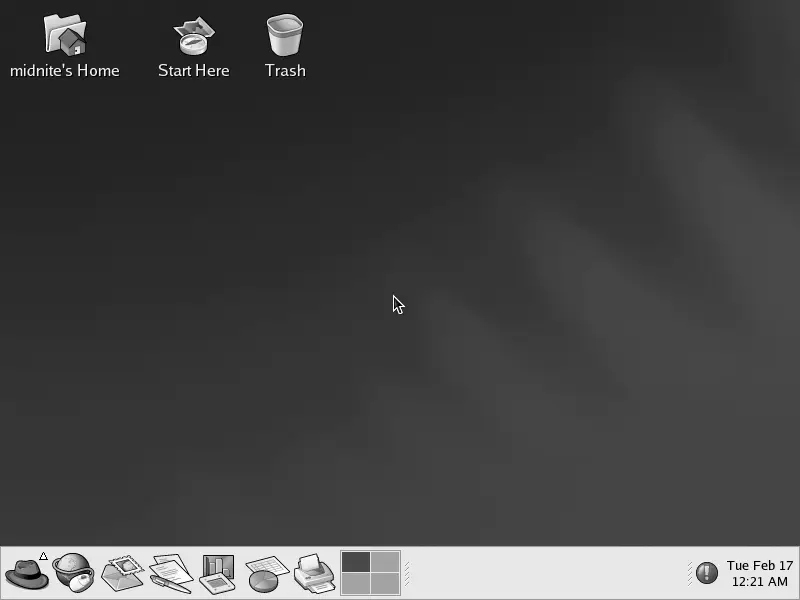
The story starts with Marc Ewing, who in 1994 built his own distribution and named it Red Hat Linux. The name came from the red Cornell University lacrosse cap he often wore during his years at Carnegie Mellon. The first release was announced on November 3, 1994, on the comp.os.linux.announce newsgroup.
Soon after, in 1995, Bob Young bought Ewing’s business and the two founded Red Hat Software. That same year brought Red Hat Linux 2.0, one of the first distributions to ship the RPM package management system, which still defines the entire family today. RPM solved something scarce at the time: a clean, repeatable way to install, update and remove software.
From a homemade distro to a market leader
Through the second half of the nineties, Red Hat Linux built a reputation as the most approachable and best-documented distribution around. Its graphical installer, its package management and its broad application catalog made it the entry point for thousands of users arriving from the Unix world or from Windows. The company went public in 1999, at the height of the dot-com boom, proving that a profitable business could be built around free software.
Success brought a tension that was hard to resolve, though. Enterprises wanted stability, long-term support and certifications; enthusiasts wanted the latest version of every component. Serving both audiences with a single product kept getting harder.
2003: the split into RHEL and Fedora
The answer arrived in 2003 with a decisive move. Red Hat discontinued the Red Hat Linux line and split its strategy in two. On one side came Red Hat Enterprise Linux, aimed at corporate environments, with paid support and long life cycles. On the other came the Fedora Project, a community-driven, free distribution sponsored by Red Hat and meant for home use and for experimenting with cutting-edge technology.
Fedora Core 1 was released in 2003. The final classic release, Red Hat Linux 9, had shipped that same year and reached its official end of life in 2004. The logic behind the new architecture was elegant: Fedora would act as the innovation laboratory, and its proven code would feed the future enterprise releases. In practice, Fedora became the upstream of RHEL.
Fedora as an engine of innovation
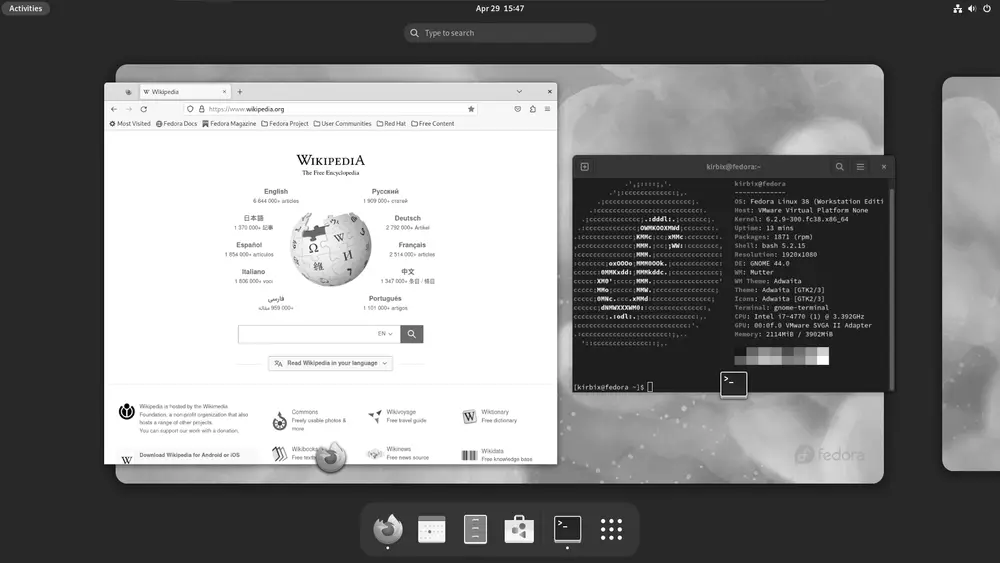
That role as a testing ground explains Fedora’s character. Its release cycle is fast, two versions a year, and it routinely ships technologies ahead of nearly everyone else. GNOME is its default desktop, SELinux runs in enforcing mode out of the box to harden the system through mandatory access control, and the package system moved from yum to dnf, which became the default manager starting with Fedora 22 in 2015.
One of the most talked-about technical milestones came with Fedora 33, released on October 27, 2020, which adopted Btrfs as the default file system in its Workstation edition. Btrfs brings cheap snapshots, compression, data integrity checking and multi-device support, modern capabilities that previously asked for manual setup.
If you want to compare approaches, there are compelling alternatives nearby, from the veteran Debian to polished desktop options like Ubuntu or the rolling release of openSUSE.
The CentOS earthquake and the community’s response
For years, CentOS was the free, binary-compatible rebuild of RHEL, hugely popular on servers. In 2020 Red Hat announced that CentOS would stop being that stable clone and instead become CentOS Stream, a version that sits ahead of RHEL rather than copying it. The decision stirred up controversy and gave rise to alternatives such as Rocky Linux and AlmaLinux, built by communities determined to bring back CentOS’s classic role.
The IBM era and the present
The latest major chapter centers on IBM. Big Blue announced the purchase of Red Hat for roughly $34 billion, and the deal closed on July 9, 2019. Despite early fears, Fedora has kept its community governance and its pace of innovation, and RHEL remains one of the leading enterprise platforms.
Three decades after that red hat, Marc Ewing’s legacy is very much alive: every time a server boots RHEL, Rocky Linux or AlmaLinux, and every time a developer tries the latest on Fedora, that homemade 1994 distribution still beats underneath.