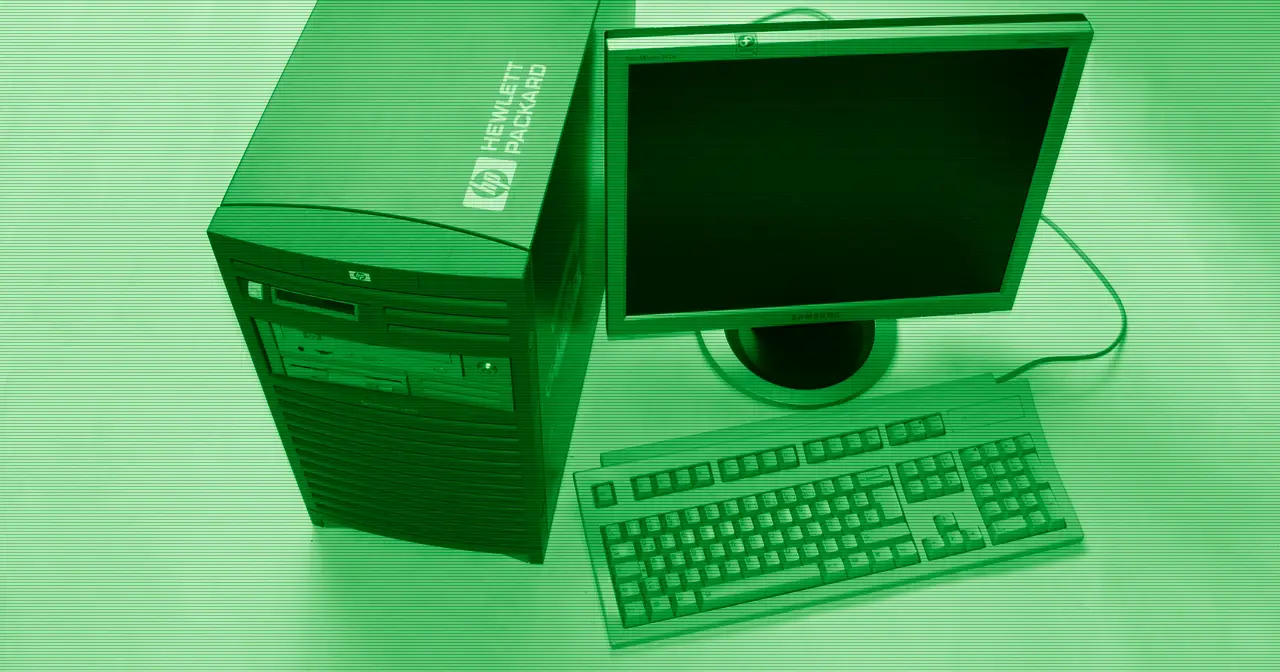
For more than four decades, HP-UX was one of the great names in enterprise Unix. While desktops filled up with other options, this Hewlett-Packard system ran data centers, banks, telcos and large corporations, and it built a reputation for rock-solid reliability. Its story is that of a Unix that survived two complete architecture changes before finally going dark in 2025.
Origins: Hewlett-Packard Joins the Unix Wave
HP-UX was born in 1984 as Hewlett-Packard’s bet on having its own Unix operating system. It started from Unix System V, AT&T’s “official” branch, and was first designed for the servers and workstations of the HP 9000 family, specifically the 200, 300 and 400 series, built on Motorola 68000 processors and HP’s proprietary FOCUS architecture.
Back then almost every major vendor shipped its own Unix variant. IBM had IBM AIX, Sun was preparing what would become Oracle Solaris, and HP answered with HP-UX. This was the era of “proprietary Unix,” each one tied to its own hardware.
The PA-RISC Era: Convergence and Maturity
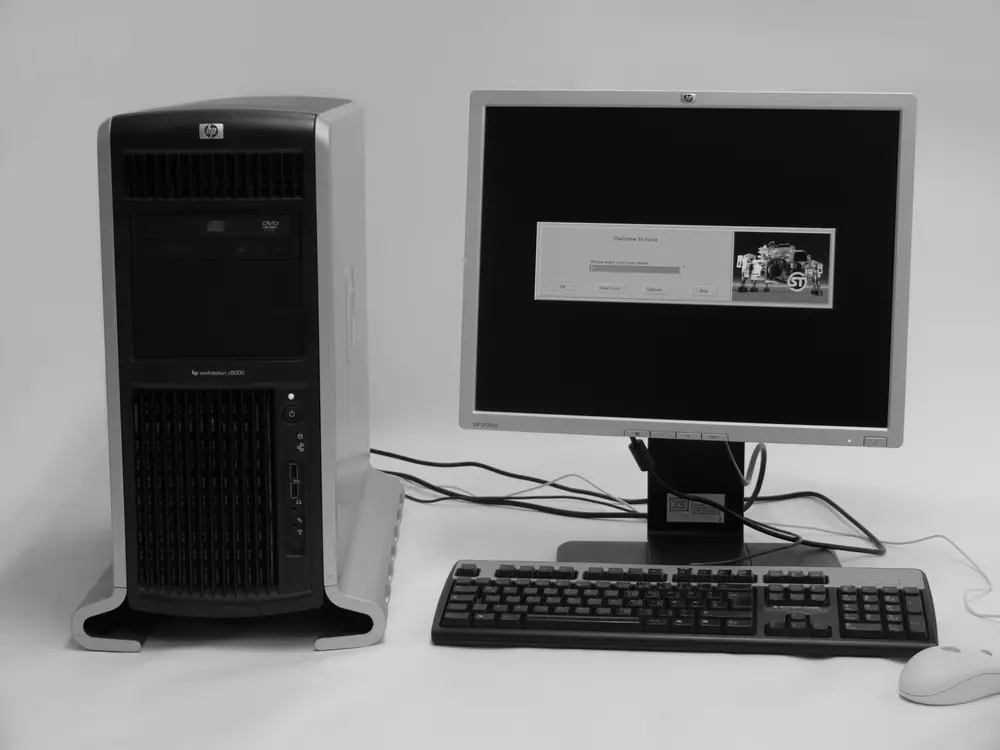
The big leap came with the PA-RISC (Precision Architecture RISC) architecture, which HP introduced in February 1986. From then on HP-UX began a long path of unification: HP-UX 7.0, in 1989, was one of the first versions that tried to merge the Motorola 68000 systems with the new RISC-based Series 800 servers.
Version 9.x (1992) brought two tools many people still remember: the System Administration Manager (SAM), which let admins handle in a single step tasks that normally took several commands, and the Logical Volume Manager (LVM) for more flexible storage. HP-UX 10.0 finished the convergence between workstations (Series 700) and servers (Series 800) under a single system.
The high point of this period was HP-UX 10.20 (1996), a very popular release that added support for 64-bit PA-RISC 2.0 processors. A year later, HP-UX 11.00 (1997) brought 64-bit addressing while keeping compatibility with 32-bit applications, which was vital so it wouldn’t break its corporate customers’ software.
The Jump to Itanium and “Operating Environments”
The turn of the century brought HP-UX 11i, which introduced the concept of Operating Environments: software bundles grouped by use case (minimal, enterprise, high availability). It was an elegant way to sell tailored configurations.
- 11i v1 (11.11), in 2000, debuted that idea on PA-RISC.
- 11i v1.5 (11.20), in 2001, was the first step toward Itanium, the architecture HP developed with Intel to succeed PA-RISC.
- 11i v2 arrived in September 2003 for Itanium systems, and in 2004 it was updated to support both Itanium and PA-RISC.
The big bet was to migrate all of HP-UX to Itanium, a risky move that would end up sealing the system’s fate.
HP-UX 11i v3: The Swan Song

HP-UX 11i v3 was released on February 15, 2007, and became the last major version, with support for both PA-RISC and Itanium. It came loaded with advances: native multipathing, a unified file cache, NFSv4, Veritas ClusterFS, multi-volume VxFS and integrated virtualization. Its VxFS/JFS file systems scaled up to 72 TB (and up to 256 TB with specific licenses), and it conformed to The Open Group’s UNIX 03 standard.
Unlike most commercial Unixes, 11i v3 had no successor. Instead of new versions, HP kept shipping yearly updates, the Operating Environment Update Releases, for nearly two decades.
The End: When Itanium Ran Out of Future
HP-UX’s fate was tied to Itanium, and that is where it came undone. Intel stopped shipping Itanium processors in 2021, and with no new chips there were no new servers to run the system on. The last known update, 2505.11iv3, came out on May 22, 2025, for HPE’s Integrity servers, with end of support on December 31, 2025.
HP-UX Trivia
- Its original graphical interface was VUE (Visual User Environment), an HP-built environment that ended up shaping the CDE (Common Desktop Environment) standard later adopted by almost every commercial Unix.
- SAM, its legendary admin tool, was even ported from PA-RISC to Motorola so it could run across different architectures. Quite a luxury in an era of fragmented hardware.
- HP-UX was never a home desktop system; it always lived in the data center, facing rivals like IBM AIX, Oracle Solaris and, over the years, the unstoppable Linux kernel that eventually ate much of the Unix market.
Today HP-UX is living computing history, a survivor that endured two complete architecture migrations before bowing out with the grace of the greats.