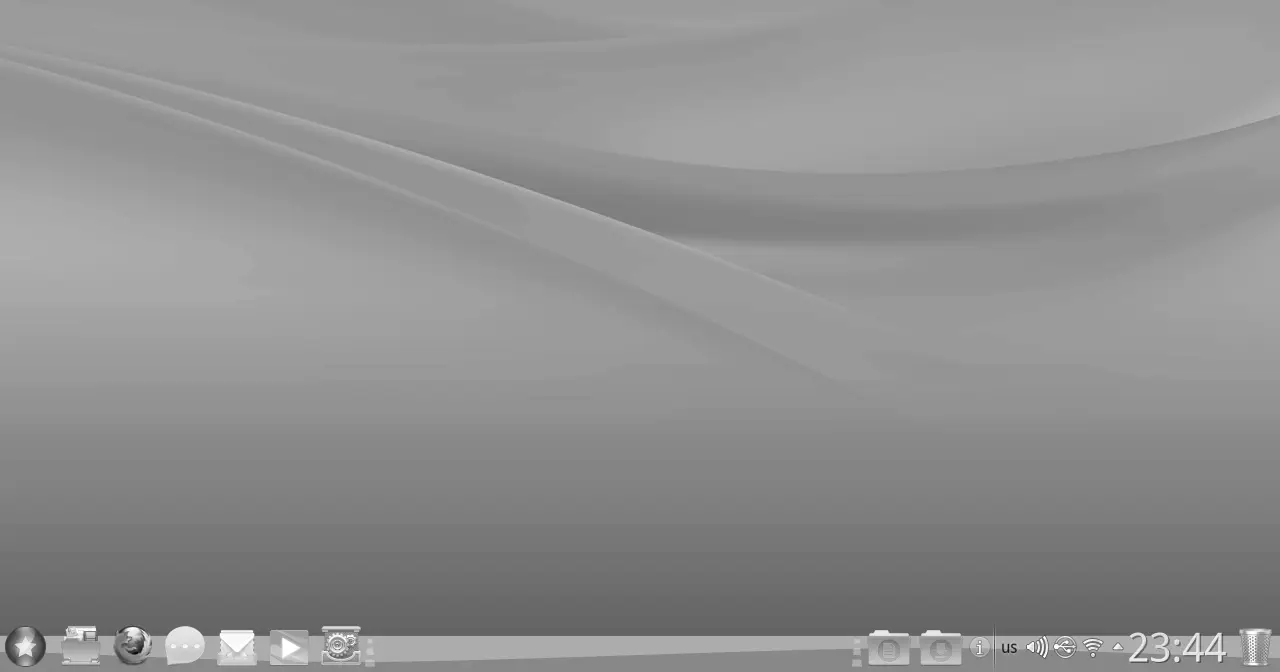
In the late 1990s, installing Linux was still something only the brave attempted. Then came Mandrake Linux, a distribution built around an idea that sounded almost reckless at the time: that anyone, even with no technical background, could get a working Linux desktop running on their computer. For years it ranked among the most popular distributions in the world. Its name changed, its parent company eventually folded, and yet its spirit held on. This is its story.
The origins: Gaël Duval and ease of use
Mandrake Linux was born in July 1998, created by the Frenchman Gaël Duval (born 1973), who would soon co-found the company MandrakeSoft. Its first release was based on Red Hat Linux 5.1, but with one decisive difference: it shipped with the then-young KDE 1 desktop out of the box, where Red Hat defaulted to something far more austere.
Duval’s stance was straightforward: Linux didn’t have to be hard. While other distributions bragged about raw power and endless options, Mandrake went for friendly graphical installers, automatic hardware detection and its own configuration tools, the famous “draktools”. That first 5.1 release carried the codename “Venice” and ran kernel 2.0.35; December 1998 brought 5.2 “Leeloo”, the first genuinely stable edition.
The rise of a flagship distribution
Through the early 2000s, Mandrake had its golden years. Its installer was among the most polished around, it came stuffed with preinstalled software, and it ran on home hardware without asking for hours of tinkering in return. For a great many people, Mandrake was their first encounter with Linux.
The naming kept shifting: from the first release up to 8.0 the product went by “Linux-Mandrake”; from 8.1 to 9.2 it became “Mandrake Linux”; and from 10.0 onward it was written as “Mandrakelinux”. MandrakeSoft even went public in 2001, right in the thick of the enthusiasm for free software.
Financial trouble and the famous name lawsuit
It wasn’t all plain sailing. In late 2002, MandrakeSoft admitted to serious cash-flow problems and, in January 2003, filed a “déclaration de cessation des paiements”, the French equivalent of bankruptcy protection. To stay afloat it launched the Mandrakeclub, a subscription service that handed out perks in return for community support.
And here comes the most famous wrinkle in the whole story. In February 2004, MandrakeSoft lost a court case against the Hearst Corporation, owners of King Features Syndicate. The reason? The comic-strip character Mandrake the Magician, whose trademark Hearst claimed was being infringed. The company had to rename its products. Few distributions can say they were forced to rebrand because of a cartoon magician.
From Mandrake to Mandriva
The way out came through mergers. In April 2005, MandrakeSoft joined forces with the Brazilian Linux vendor Conectiva, another veteran of the field. Mashing the two names together —Mandrake + Conectiva— produced a new identity: Mandriva. The company was renamed Mandriva, and its distribution became Mandriva Linux.
Oddly enough, Gaël Duval, the project’s creator, was laid off in March 2006 during a round of cost-cutting, a move that went down badly in the community. In the years that followed, Duval stayed close to privacy-respecting software, driving projects such as the /e/OS mobile system.
Mandriva held on to its technical reputation for several years, but the finances never quite added up. In 2010 a Russian investment fund bought it, and its final release, Mandriva Linux 2011, came out in August of that year. The company went into liquidation in 2015.
The legacy: Mageia and OpenMandriva
The good news is that a community distribution never really dies as long as its people stick around. As Mandriva started to wobble, its developers took the wheel.
In 2010, a group of laid-off employees and community members founded Mageia, a not-for-profit project that inherited the ease-of-use philosophy and is still going strong today. Shortly after, in 2012, the OpenMandriva Association was set up to continue Mandriva’s legacy directly; its distribution, OpenMandriva Lx, launched in 2013, leaning at first on the ROSA fork of Mandriva 2011 before going its own way.
Next to them sit other derivatives such as PCLinuxOS and ROSA itself, rounding out a family that shows just how far Mandrake’s mark reached. Today the desktop belongs to giants like Fedora, Ubuntu and Debian, but it’s worth remembering that many of the usability touches we now take for granted were popularised by that small French project from the summer of 1998.